Mental health is one of those things that’s both deeply personal and incredibly complex. We all experience ups and downs, struggles and triumphs, and sometimes, we just don’t quite understand why we (or those around us) think, act, or feel the way we do.
Lately, I’ve found that one of the best ways to explain mental health, both to myself and others, is by looking at our chickens. It might sound crazy, but hear me out. If you spend enough time watching a group of hens, you’ll see personality traits emerge, power struggles play out (“Game of Thrones” levels!), and individual quirks that mimic what we see in human nature.
Morticia: The Narcissist
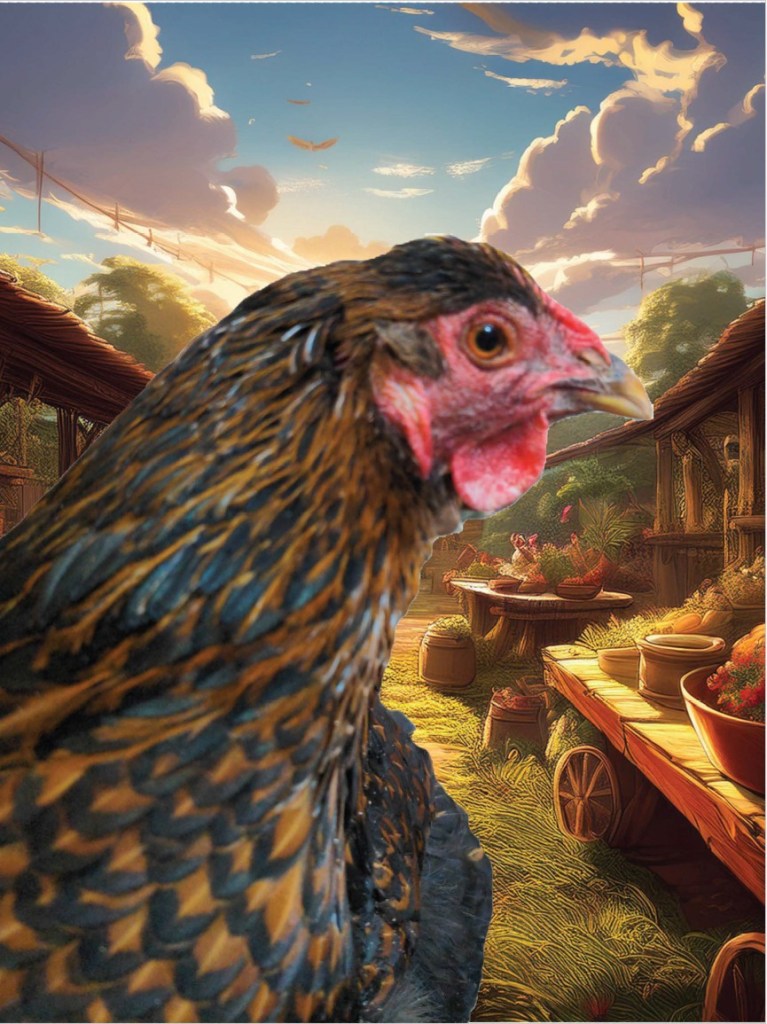
Every flock has a queen, and in our case, it’s Morticia. She struts around with an air of self-importance, making sure everyone knows that she’s superior. She takes the best sleeping spots, has to eat before anyone else, and has no issue pecking another hen to show them what’s up.
Much like narcissistic personalities in people, Morticia demands attention and control. She’s charming in her own way and absolutely beautiful, and everything is on her terms. I’m slightly jealous of her confidence, the downside is it also makes her blind to the needs of the flock. If another chicken is struggling, Morticia isn’t exactly offering emotional support, she’s busy making sure you stay in your lane and that she looks the best.
Karen: The Anxious One
Karen is our worrier. She’s the hen who jumps at shadows, squawks at us to cuddle her, and constantly checks over her shoulder as if the sky is about to fall (which, to be fair, is kind of her job according to the lore.)
She reminds me of how anxiety works in humans (me specifically.) It’s that feeling of unease, the racing thoughts, the fear that something bad is just around the corner. Karen never truly relaxes, even when all is well. And just like people with anxiety, she often misreads situations, assuming danger when there is none. On the upside, she also keeps the flock alert; sometimes, anxiety isn’t about irrational fear, just heightened awareness.
Hall & Oats: The Depressed Duo
Our Brahma duo, Hall & Oats, are the quiet ones. They move slowly, they don’t engage much in the pecking order drama, and they often sit by themselves, on top of the coop, staring into the distance like they’re contemplating the meaning of life (or they’re dumber than a box of rocks.)
Depression in humans is so common now due to a multitude of things; changing environments, scary situations, hopelessness. I see this in Hall & Oats. They aren’t sick, they aren’t bullied (even though they are lower on the pecking order), they also don’t engage the same way the others do. Maybe they feel the weight of the world (or the coop) in a different way. They’re not aggressive, they don’t steal food, they just exist. Sometimes, that’s exactly what depression feels like, just existing, rather than growing and thriving.
Sweet Pea: The Schizophrenic Hen
Sweet Pea is…well, Sweet Pea. She sees things the others don’t. She reacts to invisible threats. She’ll be pecking the ground one moment and suddenly sprint across the yard like she’s being chased by a ghost. The other hens side-eye her A LOT, unsure if they should do the same or just pretend they don’t know who she is.
Schizophrenia in humans is a complex and often misunderstood condition. It can involve delusions, and difficulty distinguishing what’s real from what’s not due to hallucinations, auditory and visual; Sweet Pea reminds me of how isolating that must feel, how terrifying it would be if your mind created a reality no one else could see. While the other chickens sometimes avoid her, she’s still part of the flock, doing her best in a world that doesn’t always make sense. Plus she happens to be our best layer!
The Pecking Order: The Social Structure of Mental Health
Every flock has a pecking order, an unspoken (and sometimes very physical) hierarchy that determines who eats first, who roosts where, and who gets to call the shots. In many ways, human social structures work the same way. Whether it’s in the workplace, social circles, or even within families, there’s always an invisible ranking system at play, whether we like it or not.
What’s interesting is how mental health can influence this dynamic. The strong-willed and dominant (like Morticia) rise to the top, while the more anxious or withdrawn (like Hall & Oats) stay on the fringes. Karen’s anxiety means she overreacts, while Sweet Pea’s erratic behavior leaves her misunderstood.
Despite their differences, they are still a flock. They rely on each other, they stick together when it matters, and they each play a role in the balance of the group.
The Lesson from the Coop
Watching our chickens has given me a whole new appreciation for the complexities of mental health. Just like in our flock, humans experience the world in different ways, some with confidence, some with fear, some with energy, and some with deep hurt.
Here’s the thing though, every single one of them belongs. Morticia may rule the roost, Karen may panic at every gust of wind, Hall & Oats may seem lost in their own world, and Sweet Pea may dance to a tune only she can hear, and together, they make up the flock. They rely on each other, balance each other out, and in their own way, make the coop whole (can you imagine a flock full of Karens!?)
Maybe that’s the real lesson; we don’t all have to think, feel, or react the same way to have value. Every personality, every struggle, every strength has its place. Whether in the chicken run or in life, the flock is stronger because of its differences, not despite them.
 Yard 2 Yield!