If you’ve ever heard that talking to your plants helps them grow, you’re not just being sweet, you might be onto something. Scientists have been digging into the fascinating relationship between sound and plant growth, and what they’re finding might change how you garden forever.
So, Can Plants Hear?
Not in the way we do, but yes, plants respond to sound. Studies show that plants can detect vibrations and use them to inform growth, movement, and even defense mechanisms. It turns out, the tiny hair-like cells in roots and stems can “feel” sound waves moving through the air and soil.
Enter 528 Hz: The ‘Miracle Tone’
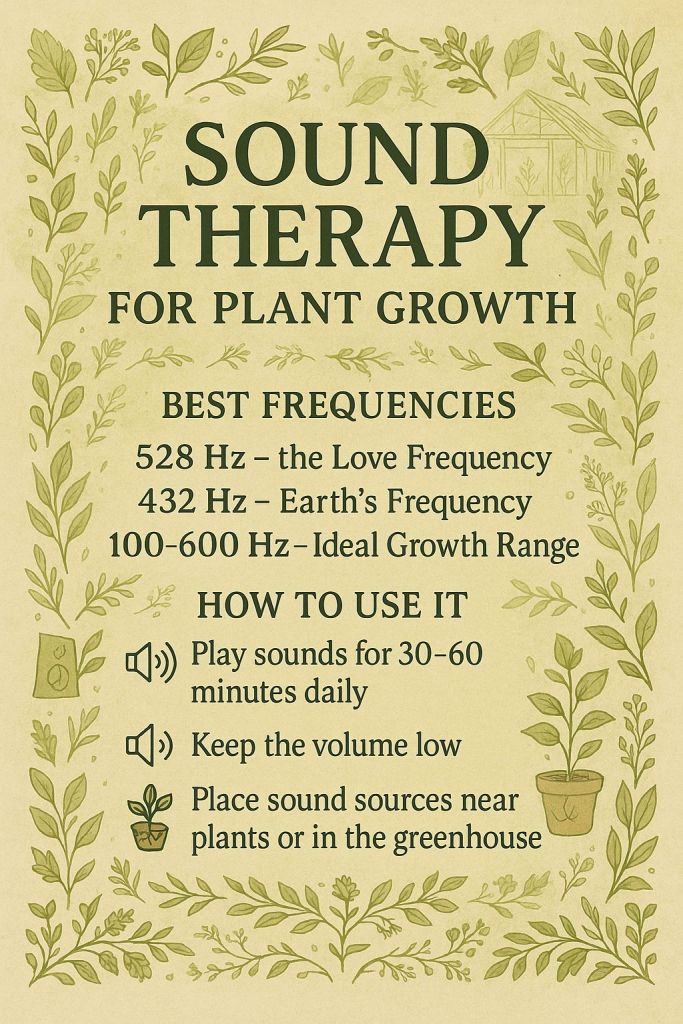
Known in alternative circles as the “Love Frequency,” 528 Hz is a mid-range sound frequency that’s been linked to everything from DNA repair to emotional healing. For plants, this tone seems to support stronger stems, faster root growth, and more robust foliage.
Here’s Why It Works:
Stimulates cell structure – Low- to mid-frequency sound waves gently vibrate plant cells, helping them absorb water and nutrients more efficiently.
Boosts photosynthesis – Vibrations in the 400–600 Hz range have been shown to speed up the process by which plants convert sunlight to energy.
Improves germination – Studies found that seeds exposed to certain tones sprouted faster and with higher success rates.
It’s Not Just 528 Hz…
432 Hz: Often called the Earth’s frequency. It’s soothing and gentle, thought to support overall plant health.
100–600 Hz range: Generally safe and beneficial for growth.
Too high? That’s bad! Frequencies over 5000 Hz may actually stress plants, causing slower growth or even damage.
How to Use Sound in Your Garden:
Play tones like 528 Hz for 30–60 minutes per day in your greenhouse or near your garden beds.
Use a waterproof Bluetooth speaker for outdoor setups.
Keep the volume moderate, think background hum, not rock concert.
Be consistent. Sound therapy works over time.
We made a custom 528 Hz sound file just for our Yard 2 Yield community to keep your garden relaxed and thriving!
 Yard 2 Yield!