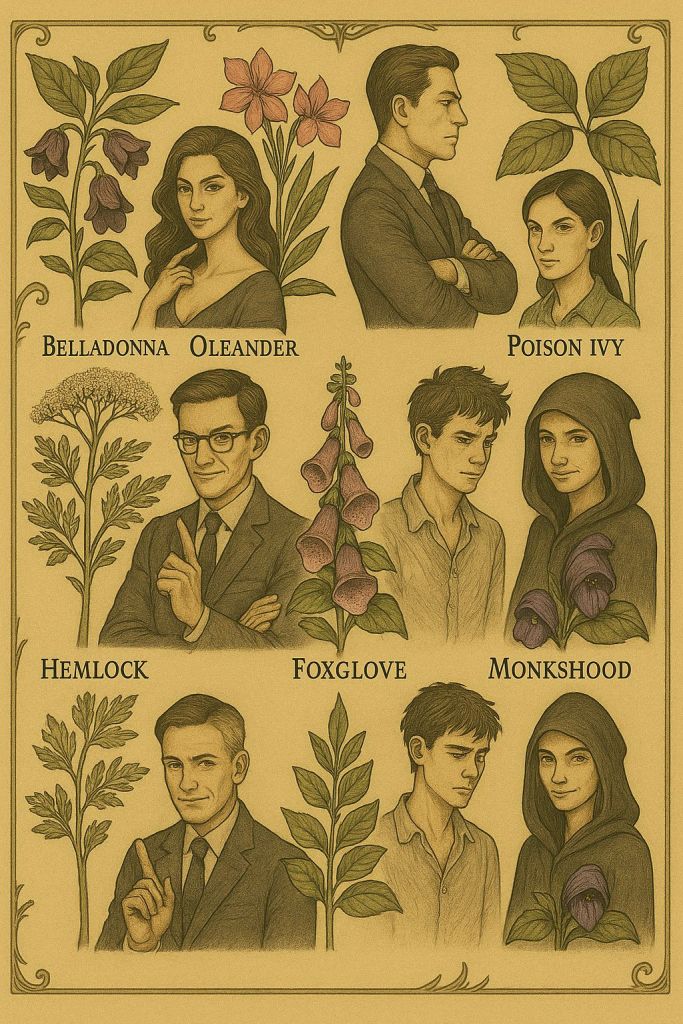
Some plants are drop-dead gorgeous, and I do mean drop dead. They bloom bright, thrive in the wild, and lure you in with sweet smells or innocent petals. But touch the wrong one, and you’ll be in hives. Swallow it? See you on the other side.
People? Well, they’re not all that different.
In both the garden and the human experience, beauty and danger often grow side by side. So today, we’re comparing poisonous plants to toxic personality types, because sometimes the best life lessons come with leaves and thorns.
Let’s dig in.
—
Belladonna – The Seductively Dangerous Type
Deadly Nightshade earned its name for a reason. With shiny black berries and a history of being used as both a cosmetic and a poison, Belladonna is the queen of “look but don’t touch.”
Toxic trait: This is the smooth talker, the sultry charmer, the one who makes your stomach flutter and your intuition scream at the same time. You’ll be mesmerized… right up until the symptoms kick in.
—
Oleander – The Pretty Narcissist
Oleander is everywhere, landscaped into neighborhoods because it’s easy to grow and stunning in bloom. But even a nibble of this plant is deadly, and burning it can release fatal fumes.
Toxic trait: The narcissist who values looks over substance. They’re all about their image, and being close to them means breathing in toxicity. They’ll smile while they drain you dry.
—
Poison Ivy – The Passive-Aggressive
“Leaves of three, let it be”—and honestly, same goes for that friend who always delivers compliments with a sting.
Toxic trait: The passive-aggressive personality slides in under the radar. One minute, they’re supportive; the next, you’re up all night wondering why their words made you feel like trash. It’s not just a rash, it’s an emotional reaction.
—
Hemlock – The Intellectual Manipulator
Hemlock is responsible for one of history’s most famous poisonings (RIP Socrates). It looks like parsley. It pretends to be helpful.
Toxic trait: This is the one who weaponizes logic and “just playing devil’s advocate.” They twist arguments, control the narrative, and make you doubt your own reasoning. Smart? Yes. Safe? No.
—
Foxglove – The Heartbreaker
Foxglove is mesmerizing. Its bell-shaped flowers have medicinal qualities that regulate the heart, but too much, and your ticker just stops.
Toxic trait: This is the romantic rollercoaster. One moment they’re flooding you with affection, and the next they’re gone, silent, or cruel. It’s a cycle of highs and heartbreaks, and it’s exhausting.
—
Monkshood – The Secret Saboteur
Also known as Wolf’s Bane, this plant is highly toxic even through the skin. It looks like something from a fairy tale, and acts like it too.
Toxic trait: The saboteur wears a smile, knows your secrets, and uses your trust as leverage. You won’t see the betrayal coming until it’s already done. They’ll poison your joy while telling you they love you.
—
Tend Your Garden Wisely
Your inner garden deserves sunlight, nourishment, and peace. It’s not enough to weed out negativity, you’ve got to recognize what’s growing there in the first place. Toxic personalities don’t always show up as obvious villains. Sometimes they come wrapped in roses.
But you, wildflower, you’re here to bloom! So protect your roots, know your boundaries, and remember:
Just because it’s pretty doesn’t mean it belongs in your life.
 Yard 2 Yield!