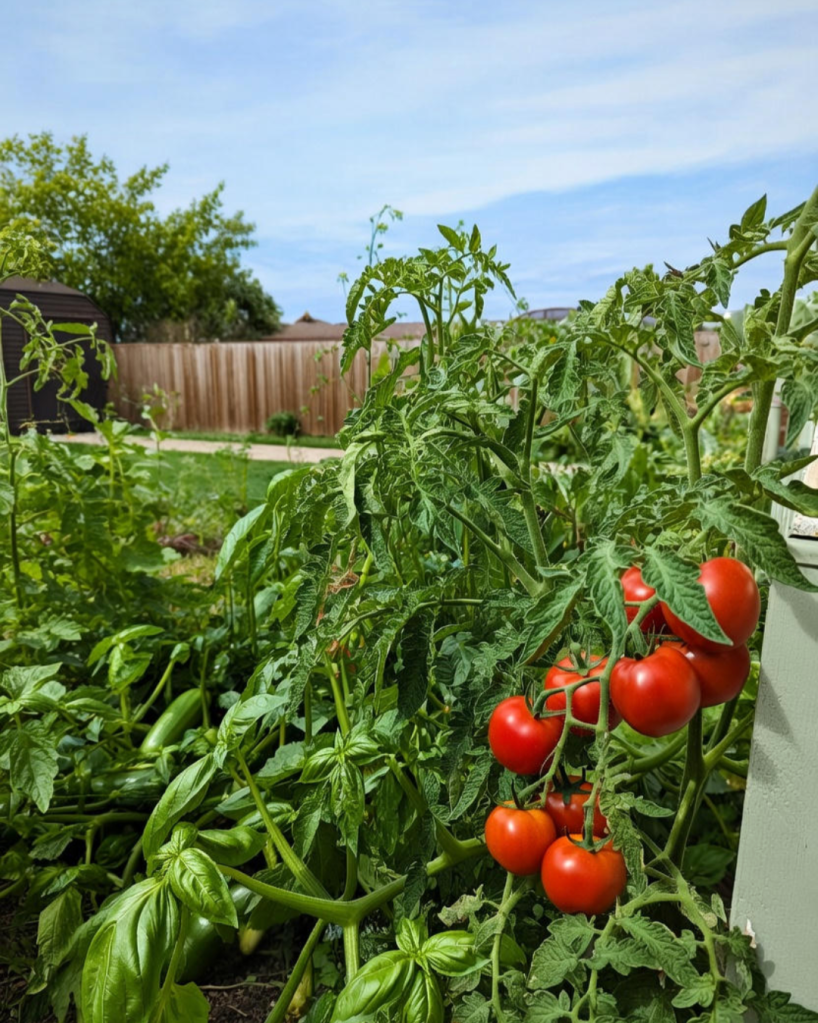
The One Habit That Turns a Garden From Stressful to Abundant

You can do this!

Most people think abundance comes from doing more in the garden, more plants, more beds, more tools, more effort.  But the truth is simpler, quieter, and far more sustainable.

If you want a garden that feeds you back, there’s one habit that changes everything:

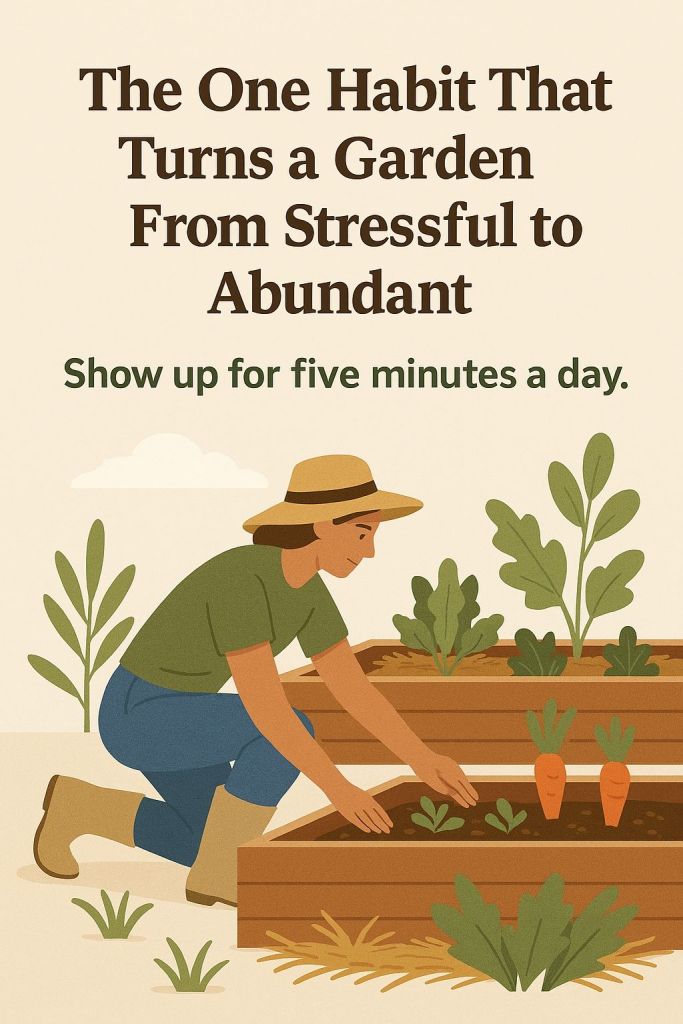
Show up for five minutes a day.

That’s it. 
Not a weekend marathon. 
Not a color‑coded plan. 
Not a perfectly weed‑free bed.

Just five minutes of presence.


Why five minutes works

Five minutes is small enough that you’ll actually do it, even on the days you’re tired, busy, or not feeling like a “gardener.”  But it’s also powerful enough to keep your garden in a state of gentle momentum.

In five minutes you can:

– Pull the weeds that would’ve become a problem next week 
– Water the one bed that actually needed it 
– Notice the pest damage before it becomes a takeover 
– Harvest the greens that would bolt tomorrow 
– Toss a handful of mulch where the soil is exposed 
– Check in with your space, and with yourself 

This habit turns gardening from a chore into a relationship. 
You stop reacting to emergencies and start tending in real time.


Consistency beats intensity

A garden doesn’t need you to be perfect.  It needs you to be present.

Five minutes a day adds up to:

– 35 minutes a week 
– 150 minutes a month 
– 30 hours a season 

And those 30 hours are targeted, intuitive, and responsive, not wasted on fixing what got out of hand.


What this habit gives back

When you show up daily, even briefly, your garden becomes:

– Less overwhelming – because nothing has time to spiral 
– More productive – because plants get what they need when they need it 
– More alive – because you’re in sync with it 
– More nourishing – because tending becomes grounding instead of stressful 

And here’s the part no one tells you: 
Five minutes often turns into ten.  
Ten turns into twenty.  
Not because you “should,” but because it feels good to be there!


How to start today

Pick one tiny anchor:

– When you let the dog out 
– When you finish your morning coffee 
– When you walk to the mailbox 
– When you get home from work 

Step outside. 
Touch the soil. 
Do one small thing.

That’s the habit that grows abundance, not just in your garden, but in you! 🤗
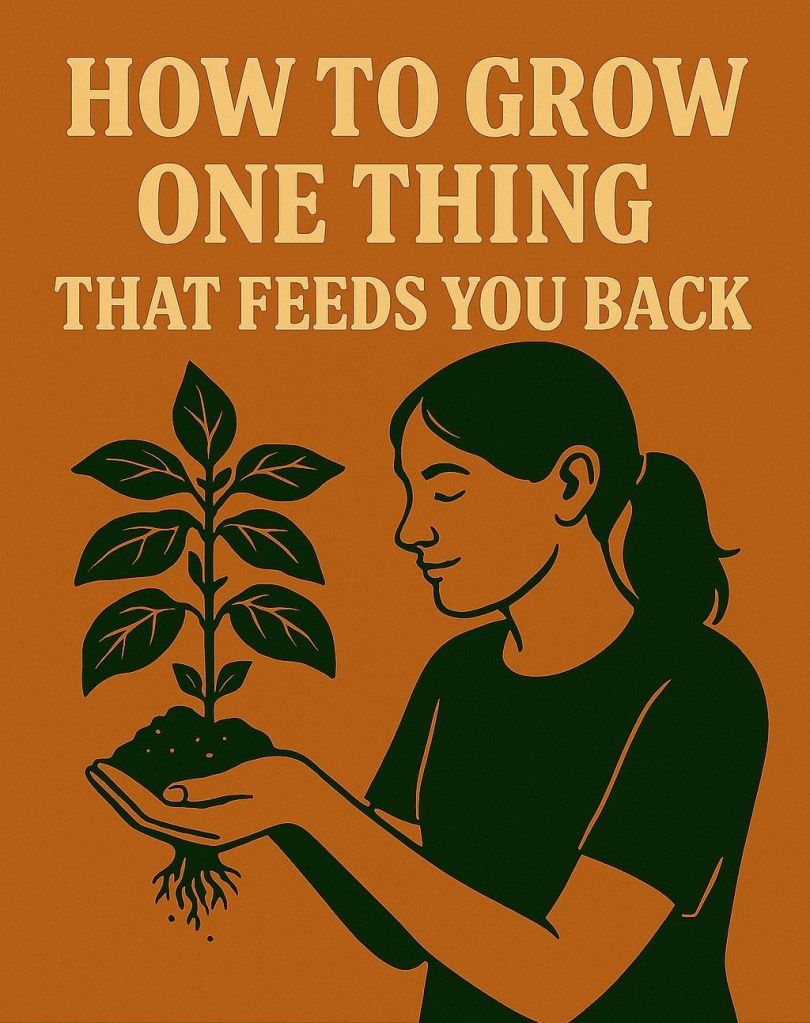
How to Grow One Thing That Feeds You Back

Start with intention, not perfection

You don’t need a full garden.  You don’t need raised beds or fancy tools.  You need one thing: a plant that nourishes you, physically, emotionally, or spiritually.

This is about reclaiming your relationship with food, with care, with your own capacity to nurture.

Step 1: Choose your plant

Pick something that feels doable and meaningful.  A few great options:

  • Kale: hardy, forgiving, nutrient-dense
  • Cherry tomatoes: joyful, productive, easy to snack on
  • Basil: aromatic, versatile, thrives in containers
  • Green onions: regrow from scraps, minimal effort
  • Calendula: edible petals, skin-soothing, medicinal

Ask yourself: What do I want to feel when I harvest this?  Nourished?  Proud?  Grounded?

Step 2: Find your space

You don’t need a yard.  You need light, a container, and soil.

  • Sunny windowsill: perfect for herbs and greens
  • Balcony or porch: great for tomatoes or peppers
  • Patch of yard: even 3×3 feet is enough
  • Community garden plot: shared space, shared wisdom (check out our resources page!)

Step 3: Plant it with care

This is your moment of reclamation.  Slow down.  Feel the soil.  Notice the seed.  Water it like you mean it.

  • Use organic soil if possible
  • Follow planting depth and spacing instructions
  • Water gently and consistently
  • Talk to it, seriously, it helps

Step 4: Tend it like it matters

This plant is your mirror.  How you care for it reflects how you care for yourself.

  • Check it daily
  • Learn its signals (drooping, yellowing, thriving)
  • Celebrate small growth
  • Don’t panic over setbacks, they’re part of the process

Step 5: Harvest with gratitude

When that first leaf, fruit, or flower is ready, take a pause.  This is the moment.  You grew something that feeds you back.

Eat it slowly.  Use it in a meal.  Share it with someone.  Let it remind you: You are capable of nourishment!

Bonus: Reflect and repeat

Ask yourself:

  • What did I learn?
  • What surprised me?
  • What do I want to grow next?

Then do it again.  One plant becomes two.  Two plants become a garden.  A garden becomes a way of life.

Start with one thing.  Let it change you.

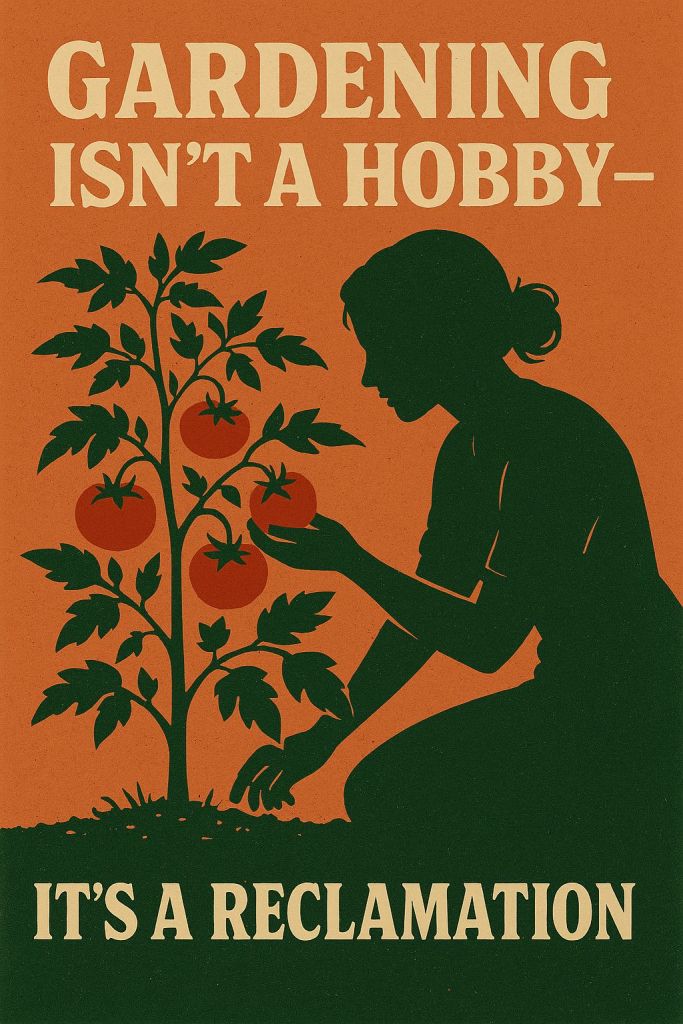
Gardening Isn’t a Hobby: It’s a Reclamation!

Reclaim!

Somewhere along the way, we were convinced that growing food is a quirky pastime.  A cute little side project.  Something for retirees, homesteaders, or people with “too much time on their hands.” 

That narrative didn’t happen by accident.  When people forget how to feed themselves, they become dependent.  When they become dependent, they become compliant.  And when they become compliant, they stop asking the most important question a human can ask: What do I actually need to thrive?

Gardening threatens that entire structure!

Growing even one edible plant is an act of quiet rebellion.  It’s a refusal to outsource your survival.  It’s a reminder that nourishment doesn’t come from a fluorescent aisle or a marketing campaign, it comes from soil, sun, water, and your own hands.

People underestimate how radical that is.

A tomato you grew yourself tastes different because you are different.  You’re no longer a passive consumer.  You’re a participant.  A co‑creator.  Someone who understands that food isn’t a product, it’s a relationship.

And relationships change people.

When you grow food, you start noticing things you were never supposed to notice: 
– how much waste the system produces 
– how fragile supply chains actually are 
– how disconnected most people feel from their own bodies 
– how healing it is to care for something that feeds you back 

You start asking better questions.  You start trusting your instincts.  You start remembering that you are capable of more than you’ve been told.

This is why gardening isn’t a hobby.  It’s a reclamation of agency, of nourishment, of belonging.  It’s a way of saying, “I’m not waiting for permission to take care of myself!”

And the best part? 
You don’t need acres.  You don’t need perfection.  You don’t need a “green thumb.” 

You just need one plant.  One seed.  One moment where you decide that you’re done being disconnected from the thing that keeps you alive.

Grow something.  
Not because it’s cute.  
But because it’s powerful. 

Let Yard 2 Yield help! 

Tune in tomorrow for your first step!

Gardening When Your Brain Is Fried: One-Bed Task Days

You’ve got this!  Keep going!

There are days when your brain feels like over watered soil, heavy, soggy, and not taking in anything new.  On those days, “self-care” advice feels ridiculous!  I don’t want a bubble bath.  I want my thoughts to slow down enough that I can hear myself think!  Gardening is the only thing that reliably does that for me, and there is science backing that up.  Studies show that gardening activities can reduce anxiety, depression, and stress, and improve overall well-being and life satisfaction.

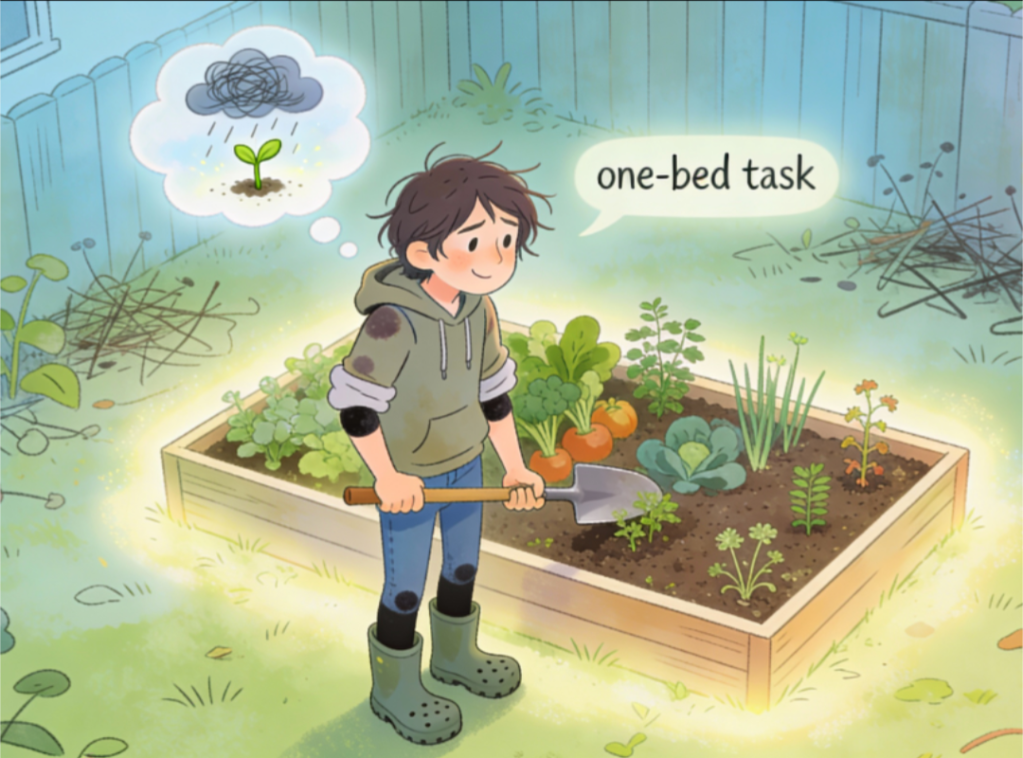
When I talk about “gardening for mental health,” I don’t mean designing some Pinterest-perfect landscape.  I mean walking outside in your stretched-out sweatshirt, looking at one raised bed, and deciding, “Okay, I can do this tiny thing.”  Research on therapeutic gardening and horticultural therapy shows that even small, structured tasks, like watering, weeding a section, or tending a single container, can improve mood, focus, and emotional regulation. 

On my worst brain-fog days, I use what I call “one-bed task days.”  The rule is simple: I pick one bed or one container and give it 10–20 minutes.  That is all.  Evidence from mental health studies suggests that focusing on one concrete task in a natural setting can reduce racing thoughts, support attention, and boost a sense of control. 
I am not trying to fix my whole yard or my whole life.  I am just trying to do one true thing with my hands.

Here is what that looks like in real life.  I step outside, probably still annoyed at my email inbox.  I walk to the messiest bed I can emotionally tolerate.  Then I choose one job only: pull the big weeds, or top up mulch, or deadhead the flowers.  Research indicates that gardening can work like a moving meditation, where repetitive actions combined with sensory input, smell of soil, feel of leaves, sound of birds, quiet the nervous system and lower stress hormones.
I notice the color of the leaves.  I listen for that one bossy bird.  I let my brain shrink down to what is right in front of me.

The first five minutes are the hardest, because my mind still wants to replay the argument, the to-do list, the worry about money or work.  Then something shifts once my hands are busy.  Studies have found that people who garden regularly report better mood, higher self-esteem, and a stronger sense of purpose, even in vulnerable groups like seniors or people with chronic mental health challenges.
That “sense of purpose” doesn’t have to be grand.  It can be as small as, “These tomatoes are alive because I showed up.”

There is also a quiet kind of resilience you build without noticing.  Plants die.  Weather wrecks your plans.  Pests show up uninvited.  Evidence from horticultural therapy research notes that learning to respond to setbacks in the garden, adjusting, replanting, trying again, can strengthen coping skills and psychological resilience over time. 
When you practice not quitting on your garden after a bad hailstorm, you are secretly practicing not quitting on yourself after a bad week.

If you are brand new to gardening or you only have a tiny space, the mental health benefits are still there.  Studies on small-space and urban gardening, including rooftop and community gardens, show improvements in emotional well-being, social connection, and quality of life. 
A couple of pots on a balcony, a grow bag by the back step, or a single raised bed can absolutely be enough “green” for your nervous system to respond.

So, how do you turn this into something you can actually use on your worst days?  Here is a simple Yard 2 Yield mini-plan you can steal:

Make a “bad brain list” of 3–5 tiny garden tasks that take 10–20 minutes (examples: weed the front half of one bed, water all containers, harvest anything ripe, prune one plant, top up mulch in one spot).  Research suggests that having low-pressure, meaningful activities ready to go makes it easier to start when you are low on motivation.

Pick a physical cue to start.  For some people it is putting on garden shoes; for others it is filling the watering can.  Studies show that pairing a small ritual with a healthy habit increases the odds you will follow through.

While you work, deliberately notice three sensory details: what you see, hear, and feel.  This kind of grounded attention overlaps with mindfulness techniques that are known to reduce anxiety and improve mood.

Stop when the timer goes off.  The goal is not exhaustion; it is a small, successful reset.  Research on therapeutic gardening emphasizes that consistent, manageable engagement delivers mental health benefits over time.

On paper, it looks too simple: go outside, touch plants, feel better.  But the combination of movement, fresh air, focused attention, and tiny wins in the garden is a powerful cocktail for a tired brain, and there is growing clinical evidence to back that up.

When life feels like too much, your yard does not have to be one more thing on the list.  It can be the one place where you are allowed to do less, move slower, and still grow something worth keeping!

What Breaking 2 Fingers in 2 Months Has Taught Me!

The second time a safe slammed my finger, I wasn’t in a firefight.  I was loading a gun safe for a customer and thought I could muscle it instead of slowing down and sliding it into the truck bed.  One bad angle, one shift in weight, and my finger was between several hundred pounds of steel and the truck.

The day the safe won
It started like a lot of “easy” jobs do: I had done this before, I was in a hurry, and I wanted to keep the customer happy.  The safe was heavy, awkward, and just a little more than I should have been trying to manage with the setup we had.  Someone stepped in to “help” without a plan, grabbed the safe at the wrong time, and the load moved in a way I did not expect.  My hand was exactly where physics decided to teach a lesson, and my index finger paid for it.  Hand and finger crush injuries like this are common when heavy loads shift unexpectedly, especially around truck beds, door frames, and narrow spaces.

How a simple “helping hand” breaks fingers
The problem was not bad intentions.  The problem was no control.  There was no clear leader on the lift, no agreed‑upon commands, and no rule about who touches the load and when.  When someone suddenly adds force or changes the angle on a heavy safe, the center of gravity shifts and pinch points open and close in an instant.  In those moments, fingers become the softest, closest thing between solid steel and another hard surface.  Pinch‑point injuries like this are one of the most frequent ways workers injure hands and fingers when handling heavy materials.

What the second broken finger taught me
Breaking one finger should have been enough.  The second time made the message impossible to ignore.  The lesson was simple: if I do not control the lift, the plan, and the communication, I am volunteering my body for someone else’s mistake.  Now, there is no loading a safe for me anymore, where it starts, where it ends, how we move it, and who calls the shots, not anymore.  Before any lift, roles are defined, the path is checked, and everyone knows: no one touches the safe unless the person in charge says so.  Clear planning and communication like this are standard recommendations in safe manual handling guidance for heavy objects.  I am the example of what can happen if you don’t.

New rules for moving heavy safes
From those injuries came a few hard rules:

One leader, one voice
Every lift has a single person calling commands, up, down, stop, and hold.  No one else makes a move or adjustment on their own.  This prevents surprise pushes or pulls that cause sudden load shifts and crush injuries.

Hands where steel cannot trap them
Fingers never go under edges, in door gaps, or in any place where the safe can roll, tip, or slide against a hard surface.  If the safe can move there, hands do not.  Keeping hands clear of known pinch zones is one of the simplest and most effective hand‑safety practices.

Use tools, not just muscle
Dollies, lift straps, bars, and other handling tools are not optional when the weight and shape say they are needed.  Human strength is inconsistent; leverage and wheels are not.  Using proper material‑handling equipment is a key control for both crush injuries and overexertion.

“No plan, no lift”
If the setup feels wrong, the angle is bad, the path is tight, or the person “helping” does not listen, the job pauses.  The safe does not move until the plan makes sense.  Stopping work to reassess when risks are high is a core principle in many workplace safety programs.

Why tell this story at all
This is not a story about a bad customer or a bad store.  It is a story about what happens when heavy steel, tight spaces, and good intentions meet no real plan.  The broken finger is the price paid for assuming “we’ll just muscle it” would be good enough, twice.  If this post does anything, it should give one person loading a safe, a cabinet, or any heavy piece of equipment a moment of hesitation before they let “help” touch the load without a clear plan.  That one pause, one conversation, and one set of rules might be the difference between a normal day and a second broken finger.  Workplaces that invest in planning and clear communication around manual handling see fewer of these preventable injuries.

Stay safe out there!

What My Wet Hen Taught Me About Burnout in the Garden

Madder than a wet hen!

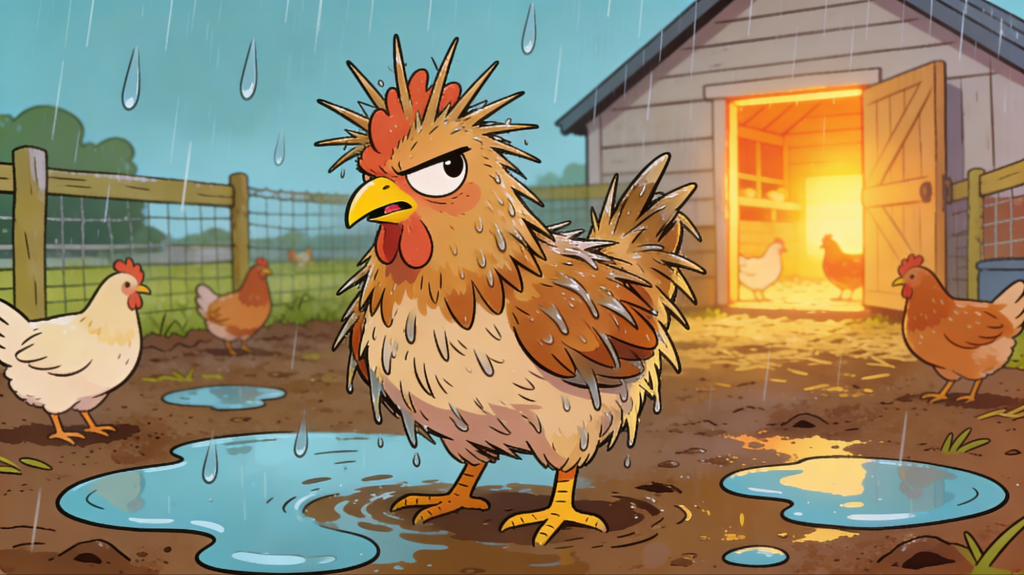
Some days I swear my favorite hen is made of equal parts rainwater and rage!   She paces the run, feathers plastered down, muttering complaints at the sky like it personally scheduled the storm just to spite her.

The wet hen moment
If you’ve ever seen a truly wet hen, you know the vibe: flustered, feisty, and somehow still marching around like she has Very Important Business to do!  She shakes herself off, glares at the puddles, then dives right back into scratching, clucking, and policing everyone else’s space.

Watching her one morning, it hit me that this is exactly how I move through a lot of my own “busy” seasons.  Drenched in obligations, irritated at everything, still forcing myself to keep scratching at an endless to‑do list because resting feels like failure.

What my wet hen taught me about burnout
Here’s what that soggy little chaos goblin has been teaching me lately!

Just because you can keep going doesn’t mean the conditions are healthy.  A perpetually wet, muddy chicken area is a breeding ground for disease and stress, no matter how tough the bird.

Burnout doesn’t show up as “I’m done.”  It shows up as snapping at people you love, forgetting simple things, or needing three coffees just to feel normal.

Overcommitting in the garden looks like it does in life: too many beds, too many projects, too many “shoulds” and not enough margin for weather, setbacks, or just plain exhaustion.

My wet hen will stay out in miserable conditions far longer than she needs to, simply because the run is “where the work is.”. That’s me, standing ankle‑deep in mental mud, telling myself I’ll rest after the next thing… and the next… and the next.

So keep going my feathery friends!  Just don’t forget to take some time to clean the mud off your talons!

Embracing New Beginnings: The Magic of January and Seasonal Shifts

New year, new growth!

Happy New Year, my beautiful dirt bags!  As we step into January 2026, the world feels hushed under a blanket of winter snow (at least here in the Midwest).  It’s the heart of winter, a season of quiet reflection and preparation, much like nature itself pausing before the burst of spring.  January isn’t just about enduring the cold, it’s a powerful symbol of fresh starts, renewal, and the endless cycle of change.


Think about it, while the holidays bring warmth and celebration, January invites us to turn inward.  The short days and long nights encourage rest, planning, and dreaming.  As Paul Theroux once said, “Winter is a season of recovery and preparation.”  It’s the perfect time to shed what no longer serves us, like old habits or lingering regrets, and make space for growth.


Seasonal changes mirror our own journeys so beautifully. Right now, trees stand bare, animals hibernate, and the ground rests under frost.  Yet beneath it all, seeds are gathering strength for the explosion of life in spring.  Just as winter transitions to the vibrant rebirth of blooming flowers and longer days, our lives have these rhythms too.  New beginnings aren’t always loud or dramatic; sometimes they’re quiet, like the first green shoots pushing through melting snow.


This January, let’s lean into that magic.  Whether you’re setting intentions (not just resolutions, those can feel too heavy), trying a new hobby, or simply committing to more self-care during these darker months, remember: “The magic in new beginnings is truly the most powerful of them all.”  (Josiyah Martin)


What does new beginnings mean to you this season?  Is it a personal goal, a shift in mindset, or just appreciating the quiet beauty of winter?  Share in the comments, I’d love to hear your thoughts as we navigate this fresh chapter together!
Here’s to 2026: full of potential, growth, and the gentle promise of spring on the horizon. 🤗

12 Signs Your Body Needs a Reset (And How to Realign Your Health Naturally)

All the things…

In today’s high-stress, fast-paced world, it’s easy to miss the early signals that your body is overloaded.  Fatigue, mood swings, cravings, and digestive issues can all be signs that your body needs a reset.  Paying attention to these cues helps reduce inflammation, improve energy, and restore balance before burnout hits.

Below are 12 common signs your body needs a reset, plus simple ways to start supporting your system today

1. Persistent Fatigue

If you’re waking up tired or feeling drained by midday, it may be a sign of hormonal imbalance, nutrient depletion, or chronic stress.  Your body is asking for deeper recovery.

2. Brain Fog or Poor Focus

Trouble concentrating or forgetting simple things often points to inflammation, poor sleep, or gut imbalance.  Mental clarity is one of the first things to drop when your body is overwhelmed.

3. Digestive Issues

Bloating, irregularity, cramping, or discomfort after meals are major indicators your gut needs attention.  Digestion is closely tied to your immune health and energy.

4. Increased Irritability or Mood Swings

Your emotional state is deeply connected to your gut and nervous system.  Irritability or anxiety may signal dysregulation or nutrient deficiencies.

5. Poor Sleep Quality

Difficulty falling asleep, waking up frequently, or feeling unrefreshed in the morning can indicate cortisol imbalance or overstimulation.

6. Skin Breakouts or Dullness

Your skin reflects what’s happening inside your body.  Congestion, dryness, or sudden breakouts can be signs of inflammation or sluggish detox pathways.

7. Intense Sugar or Salt Cravings

Cravings often point to imbalanced blood sugar, adrenal stress, or microbiome disruption, all reasons your body may need recalibration.

8. Frequent Headaches

Recurring headaches can signal dehydration, tension, poor sleep, or inflammation.  They’re an early sign your body needs better support.

9. Feeling Overwhelmed Easily

If your stress threshold feels unusually low, your nervous system may be fatigued.  Overwhelm is often one of the first emotional signs that a reset is needed.

10. Muscle Tightness or Joint Aches

Unexplained stiffness often points to inflammation, stress, or lack of restorative movement.

11. Low Immunity

Catching colds easily or having difficulty recovering indicates your immune system is working overtime and needs replenishment.

12. Feeling “Off” Without Knowing Why

One of the most important signs of all: when your body feels out of sync, your intuition is picking up on changes before your symptoms escalate.

How to Reset Your Body Naturally

You don’t need extreme detoxes or restrictive plans to feel better.  A reset can be simple and grounded:

Prioritize deep, restorative sleep

Nourish your gut with whole, anti-inflammatory foods

Reduce stress and support nervous system regulation

Stay hydrated with mineral-rich fluids

Move your body gently and consistently

Incorporate grounding, stillness, or mindfulness

Support detox pathways with hydration, sweating, and balanced nutrition

Small changes create powerful shifts when they’re done consistently.

What I think…

Your body is always communicating with you.  When you learn how to recognize the signs of imbalance, you can respond early, and prevent burnout before it starts!

Rocking 1-Inch Glam Nails on the Blue-Collar Grind: My Unapologetic Beauty Routine

Don’t ever apologize for being you!

Hey everyone, it’s your favorite spark-plug-wielding, paint-splattered dreamer who’s traded hard hats for high-shine manicures.  If you’ve ever caught yourself staring at your chipped polish mid-shift, wondering if “pretty nails” and “power tools” can coexist, pull up a stool (or a sawhorse). 

Today, I’m spilling the tea on how I keep my 1-inch talons looking like they belong on a runway, not a job site.  Spoiler: It’s possible, it’s fierce, and it’s 100% worth the side-eye from the crew.  Let’s dive in, because who says manual labor can’t come with a side of sparkle?


The Myth-Busting Intro: Why Long Nails Aren’t Just for Desk Jobs
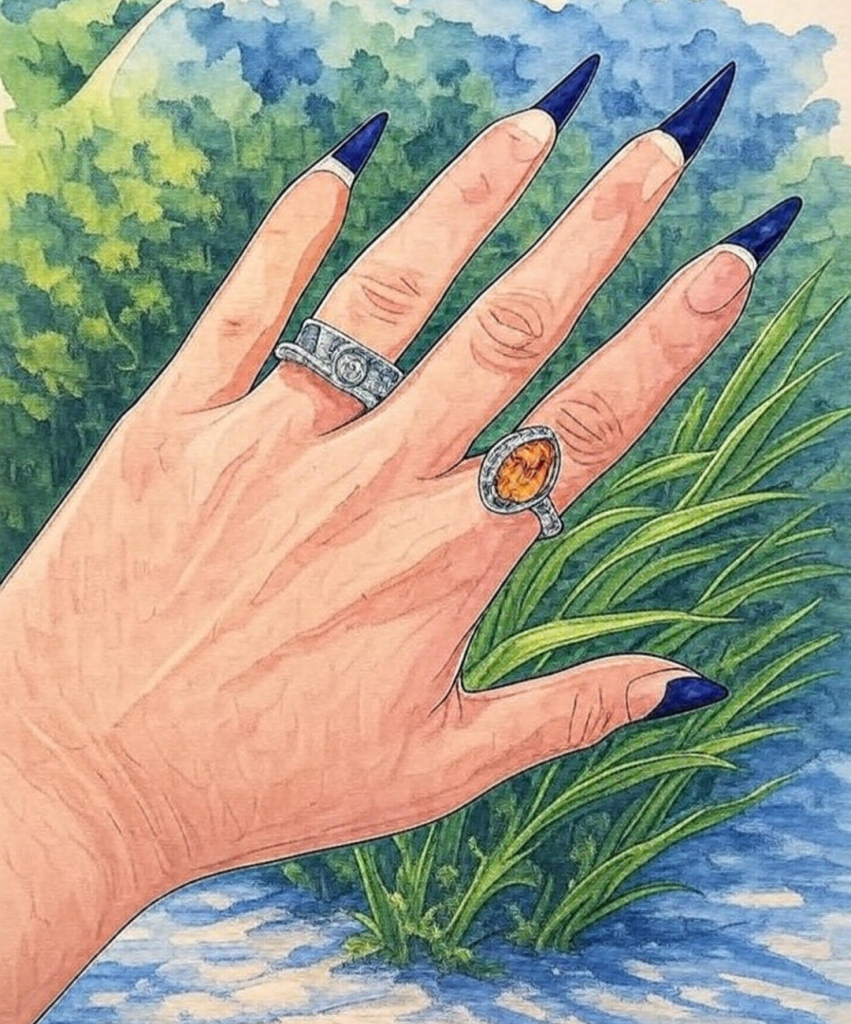
Let’s get real: In a world where “practical” often means “short and square,” rocking long nails feels like a quiet rebellion.  Historically, women in ancient China grew their nails out as a status symbol, proof they didn’t have to lift a finger for manual labor.  Fast-forward to today, and I’m flipping that script.  As a team lead at a feed store, my days are filled with gripping propane tanks, hauling 50 lb feed, and dodging cattle fencing.  Yet here I am, with acrylics that could double as cocktail stirrers.  It’s not about vanity; it’s about owning every inch of who I am, grit, gloss, and all.  And trust me, after a year of trial-and-error, I’ve cracked the code.  These tips?  Straight from the trenches (and a few fellow badasses online).


Tip 1: Fortify Your Foundation, Gel or Acrylics That Fight Back
First things first: Skip the flimsy drugstore polish.  Go for gel or acrylic extensions, they’re tougher than your average hard hat.  One blue-collar queen swears by gel nails because they “stood up really well” against daily wear and I do mine bi-weekly (budget hack: Find a salon that does “tradeswoman specials” or DIY with a kit for touch-ups).  Pro move?  Keep up on fills to avoid lifting edges, which can invite fungus or breaks.  My go-to?  A nude base with dark tips, subtle enough for safety meetings, sassy enough to make everyone do a double-take!


Tip 2: Glove Up Without the Sweat, Protect Without Sacrificing Style
Gloves are your BFF, but not the bulky ones that turn your hands into oven mitts.  Opt for nitrile or latex disposables that fit like a second skin, they shield your nails from chemicals, grease, and grime without chipping your fresh mani.  I stash a pack in my locker and swap ’em mid-shift.  Bonus: They make me feel like a glamorous mechanic from a ’90s music video.  Just remember to peel them off carefully, nail snags are the enemy.


Tip 3: Hydrate Like It’s Your Job (Because It Kinda Is)
Dry, cracked cuticles?  Not on my watch.  Hydration isn’t just for your water bottle, it’s nail armor.  Slather on cuticle oil daily (I use one with emu oil) right over your polish, and follow with a thick hand cream before bed.  For extra strength, mix in some lemon or cypress essential oils, they’re like tiny superheroes for brittle tips.  And don’t sleep on diet: Pop a gelatin supplement or sip on bone broth.  It sounds weird, but my nails went from snapping like twigs to unbreakable after a month.  Pro tip from the field: Keep a mini oil roller in your pocket for on-the-go touch-ups.


Tip 4: The Breakage Battle Plan, File, Flex, and File Again
Long nails + heavy lifting = potential disaster.  My rule?  File ’em square and strong (once you get good, you can sharpen them) weekly with a crystal file (glass ones are too fragile for this life).  If a snag happens (it will), don’t panic, trim the weak bit immediately to avoid full-on breaks, which can lead to bruising or worse.  And hydration flex? Drink up, moisturized nails bend instead of snap.  I’ve even seen TikTok pros demo “unbreakable” routines tailored for trades like mine, proving you can hammer nails even with fabulous ones!


The Real Talk: Handling the “You Can’t Do That Here” Vibes 🙄
Look, not everyone’s on board.  I’ve gotten the “How do you even type on that tablet?” quips (fingertip swipes, baby).  Or the practicality pushback: Long nails can snag tools or slow you down in a pinch.  But here’s my flex: Healthy, long naturals (or enhancements) scream self-care and nutrition, it’s a badge of a balanced life, not a hindrance.  If safety’s the concern, chat with your boss, most jobs just need ’em clean and snag-free.  And for inspo?  Check out “Blue Collar Beauty” guides from folks like the Trans Handy Ma’am, who nails (pun intended) job-site glam.


Wrapping It Up: Pretty Nails, Powerful Hands
Bottom line?  1-inch beauties don’t make me less of a boss, they make me more.  It’s about rewriting the rules: Blue-collar doesn’t mean basic.  Next time you’re at the salon, book that set.  Your hammer hand (and your confidence) will thank you.
What’s your go-to nail hack for the grind?  Drop it in the comments, I live for the sisterhood tips!  Until next time, stay sparkling, stay strong. 💅🔧

Why Your Backyard is Begging for a Glow-Up: The Yard 2 Yield Way!

Wild and crazy is amazing!

Hey there, fellow dirtbags!  Ever stare at that patch of grass out back and think, “What if this wasn’t just a lawn… but a launchpad to freedom?”  That’s the spark that lit the fire for Yard 2 Yield, because ordinary yards deserve extraordinary lives!  We’re on a mission to flip the script: from mow-and-go monotony to harvest-and-hustle heaven.  Imagine plucking sun-ripened tomatoes like they’re high-fives from Mother Nature herself.  Feels good, right?  Does even better for your wallet and the world!
Let’s break it down, seed by seed. 

First off, health on a hoe: Nothing beats the crunch of veggies you grew with your own sweat and soil.  No mystery sprays, just pure, powerhouse nutrition straight from your plot.  We’re talking vitamins that dance, flavors that pop, your body will thank you with energy that lasts longer than your last Netflix binge!
Then there’s the savings showdown.  Ditch those $5-a-bunch greens at the store and watch your grocery bill shrink faster than a slug in salt.  Our Garden Starter Kits?  They’re your all-in-one ticket: seeds that sing, tools that rock, and tips that turn newbies into green geniuses.  Pre-order yours now and say goodbye to overpriced organics and hello to homegrown abundance!


But wait, there’s more magic: That quiet confidence of self-reliance.  Storms hit?  Supply chains snag?  No sweat, you’ve got your own supply line, rooted right in your yard.  It’s resilience wrapped in resilience, baby!  Plus, the joy?  Oh man, the joy of watching tiny sprouts push through like they’re yelling, “We made it!” It’s not just gardening; it’s growth, for your plants, your skills, and your soul.


At Yard 2 Yield, we’re all about making this easy and epic.  Join the crew: Sign up for our emails, grab a kit, and let’s turn “what if” into “watch this!”  Your yard’s ready.  Are you?

Drop a comment, what’s your first grow goal?  Tomatoes for triumph or herbs for hustle?
Let’s yield the future, together!