Singing to My Plants: The Weirdest and Best Kind of Therapy

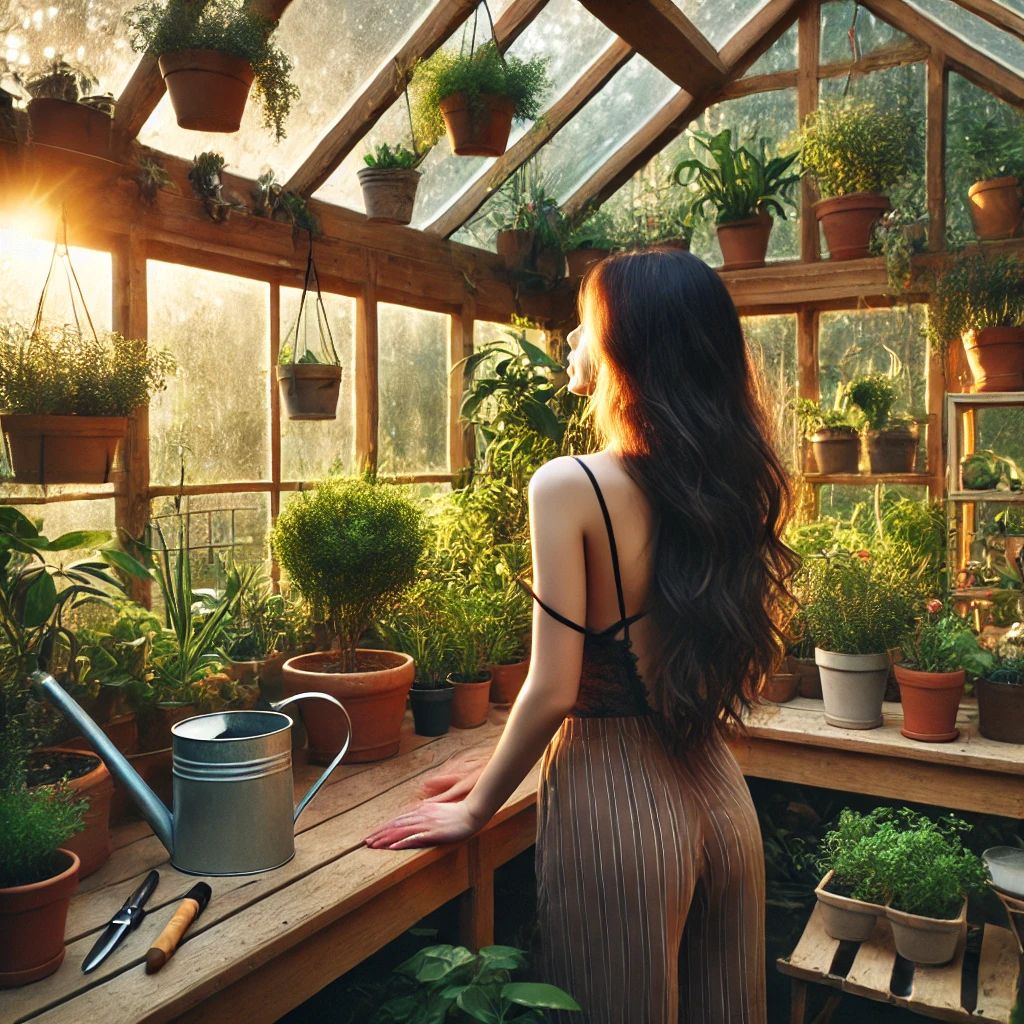
My dream greenhouse!

People say talking to your plants helps them grow, and I thought, what if I tried singing to them?  It might sound a little out there, and it’s one of the most unexpectedly therapeutic things I’ve ever done!  As someone who’s deeply connected to nature and holistic healing, I’ve discovered that those quiet (and sometimes not-so-quiet, thanks to the chickens and Ryu) moments with my plants have a magic all their own.

The Connection Between Music and Growth

It began as a simple habit, I’d hum while watering or sing softly while repotting seedlings.  And soon, it became something more.  Singing became a way to be fully present, sharing a little joy with the green souls growing under my care.  Science says plants might actually respond to sound waves, but honestly?  I’m the one who’s growing the most!

Music as Mindfulness

When I sing to my plants, my mind slows down.  Worries fade into the background, and I’m grounded in the moment, no screen (unless I whip out the karaoke machine), no to-do list, just me and the sprouts.  It’s like nature and I are having a little duet, a reminder that growth is slow, steady, and worthy of celebration.

How I use it:

Singing while watering to create a calm atmosphere

Humming softly while repotting to ease stress

Playing soft music in the garden to set a peaceful tone

Sitting up a little concert with a mic (a wooden spoon works great) and a chair and singing your heart out

A Therapy Like No Other

Some days, I sing happy tunes; other days, it’s a soulful ballad only the beans hear (their favorite in Hallelujah by Pentatonix.)  Either way, it’s a release, of stress, sadness, or pure joy.  The best part?  My plants don’t judge; they just keep growing, reflecting my care back at me with every new leaf and bud!

Favorite moments:

Seeing new growth after a week of singing sessions

Feeling lighter and more present after a garden serenade

Watching the garden thrive alongside my own personal growth


The Lesson in Growth

Singing to my plants has taught me something profound: Growth responds to care, consistency, and love; whether it’s in a plant, a person, or a dream.  So if you catch me serenading my calendula, just know, I’m not crazy, I’m healing.  And growing right along with them!

Bringing Music into Everyday Life

What I love most about singing to my plants is how seamlessly it fits into my daily routine.  It reminds me that nature doesn’t just provide for us; it partners with us!  Whether it’s calming my nerves through music or nurturing my garden with song, these little moments of connection are powerful.  If you’re curious about adding music to your plant care, start simple.  Pick a favorite song, step alongside your plants, and let the music do its work.  The garden and your plant babies will thank you! 💕

Nature’s Medicine Cabinet: The Oils and Herbs We Can’t Live Without

Farmer’s market this summer

Today is a special day in our home, it’s Taylor’s birthday!  And as I sit here reflecting on the simple joys of life, I can’t help but think about the beauty of being a traditional wife and homemaker.  There’s something deeply fulfilling about caring for your family with natural remedies, home-cooked meals, and a home filled with love.  Nature, after all, has always had the answers.

Long before pharmacies lined every street corner, people turned to the earth for remedies, skincare, and emotional support.  As a naturopathic healer and someone who believes deeply in the power of natural remedies, I’ve seen firsthand how simple herbs and oils can transform well-being, inside and out.

So today, let me take you on a tour of my personal “nature’s medicine cabinet”, the oils, herbs, and plant-based wonders that have become staples in my daily life.

🌿 Lavender Oil: The Calming Classic

Lavender oil is like that dependable friend who always knows how to calm you down.  It’s my go-to for reducing stress, soothing burns, and helping with sleep.  Just a few drops on my pillow or in a diffuser can shift the whole energy of a room.

How I use it:

Add to lotion for a calming nighttime moisturizer.

A few drops in the bath for instant relaxation.

Mix with aloe vera for a sunburn-soothing gel.

🌿 Walnut Oil: The Skin Nourisher

I recently discovered walnut oil, and my dry skin is forever grateful.  Packed with omega-3s, antioxidants, and vitamins, it deeply hydrates without feeling greasy.

Favorite uses:

As a facial moisturizer after cleansing.

Mixed with brown sugar for a natural exfoliating scrub.

A few drops on my hair ends for shine and softness.

🌿 Peppermint Oil: The Energizer

When my energy dips or a headache hits, peppermint oil is my secret weapon (even though I loathe the smell!)  Its cooling sensation and potent scent provide quick relief and a much-needed pick-me-up.

Go-to applications:

Dab on temples for headache relief.

Diffuse in the morning for an energizing atmosphere.

Add a few drops to a DIY foot soak for tired feet. (Taylor’s favorite!)

🌿 Chamomile: The Soother

Chamomile isn’t just for tea; it’s a gentle powerhouse for calming both skin and nerves.  I use it regularly when tension is high or when my skin needs some TLC.

How it helps:

Steeped in tea to calm anxiety and aid digestion.

Infused in oil for a soothing massage blend.

As a compress for irritated or inflamed skin.

🌿 Calendula: The Skin Healer

Calendula has been a skin savior for centuries, thanks to its anti-inflammatory and antimicrobial properties.  It’s gentle enough for sensitive skin and strong enough to speed up the healing of minor cuts or rashes.  We are currently growing this little beauty in our greenhouse!

My favorite uses:

As an infused oil in homemade lotions.

In salves for scrapes and bug bites.

A soothing tea to support lymphatic health.

🌿 Rosemary: The Mental Clarity Booster

Rosemary isn’t just for cooking; it’s a brain-boosting herb with a crisp, herbal scent that helps with focus and memory.

Ways I use it:

Diffused when I need to concentrate.

Added to hair rinses for scalp health.  (Another one of Taylor’s favorites!)

As a steam facial to refresh my skin and mind.

🌿 Tea Tree Oil: The Protector

Tea tree oil is like nature’s disinfectant.  With its antibacterial, antiviral, and antifungal properties, it’s an essential part of my toolkit for skin issues and cleaning.

Practical uses:

Applied to blemishes to reduce inflammation.  (Great for teenagers!)

Added to natural household cleaners.

In foot soaks to prevent fungal issues.

Bringing Nature into Everyday Life

What I love most about these oils and herbs is how seamlessly they fit into daily routines.  They remind me that nature doesn’t just provide for us; it partners with us.  Whether it’s calming my nervous system with chamomile or nourishing my skin with walnut oil, these natural remedies help me feel more connected, balanced, and, honestly, more like myself.

Being a traditional wife in today’s world feels like reclaiming something sacred, a connection to the earth, my family, and a simpler, more intentional way of living.  On Taylor’s birthday, I’m reminded of how these natural remedies are more than just self-care; they’re part of the legacy we build when we nurture our homes and our loved ones with intention and love.

If you’re curious about integrating natural remedies into your life, start simple.  Pick one oil or herb and explore its benefits.  Nature’s medicine cabinet is vast, and there’s always something new to discover! 💕

Walnut Oil: The Skin Savior You Didn’t Know You Needed

If you’ve ever battled dry, flaky, or just plain old looking skin, you know the struggle is very real.  Finding the perfect moisturizer can feel like an endless quest, one that often leaves you with a shelf full of products that promised hydration but didn’t deliver.  What if the solution wasn’t in a fancy, overpriced cream, instead in a simple, natural oil?  Enter walnut oil, the underrated skincare powerhouse that’s been hiding in plain sight.

I recently discovered how incredible walnut oil is for my own skin, and let me tell you, it’s a total game changer!  Before we dive into why it’s so magical, let me take you back to where this journey really began.

From Store-Bought to Handmade: My Skincare Awakening

I used to be one of those people who would walk down the skincare aisle, scanning bottle after bottle, hoping this one would finally be the answer.  The promises on the labels were always the same: “deep hydration,” “anti-aging,” “glowing skin.”  And time after time, I found myself with products that either left my skin feeling greasy, dry again within hours, or worse, irritated.

Then one day, I looked at the back of a lotion bottle.  I mean, really looked. I couldn’t pronounce half the ingredients, and I had no idea what most of them even were.  Why was I trusting my skin, my body’s largest organ, to a cocktail of chemicals I couldn’t identify?  Knowing that those same chemicals were leaching into my skin?  That’s when I knew something had to change.

I started researching, experimenting, and eventually making my own lotion from scratch.  At first, it was a personal challenge, a way to cut out the unknowns, a way to save Taylor’s skin too.  As I learned about the power of natural ingredients, I fell in love with the process.  And that’s when I stumbled upon walnut oil.

Why Walnut Oil is Pure Gold for Your Skin

Walnut oil isn’t just for cooking (although it’s great for that too!).  This liquid gold is rich in omega-3 fatty acids, antioxidants, and vitamins that work together to deeply nourish and protect your skin.  Here’s what makes it so special:

Ultra-Hydrating: If your skin is drier than a forgotten houseplant, walnut oil delivers serious moisture without feeling greasy.

Rich in Antioxidants: Packed with vitamin E, it helps fight free radicals, those pesky molecules that accelerate aging and dullness.

Anti-Inflammatory Powers: If redness or irritation is your nemesis, walnut oil can help calm things down thanks to its anti-inflammatory properties.

Supports Skin Elasticity: Those omega-3s work behind the scenes to keep your skin firm, plump, and youthful-looking (my favorite part!)

Helps with Eczema & Psoriasis: Because of its ability to soothe inflammation and deeply nourish, many people find it helps with chronic skin conditions.


How to Use Walnut Oil in Your Skincare Routine

One of the best things about walnut oil is its versatility. Whether you want to keep it simple or get a little fancy, there’s a way to incorporate it into your routine:

1. As a Moisturizer: After cleansing, put a few drops in your hands and gently massage it into your skin (face, body, everything!) It absorbs beautifully without clogging pores.


2. In Your DIY Face Masks: Mix a teaspoon of walnut oil with a teaspoon of honey and a tablespoon of yogurt for an ultra-hydrating, soothing face mask. Leave on for 15 minutes and rinse with tepid water.


3. Under Your Eyes: Dab a tiny amount under your eyes before bed to help with fine lines and hydration.


4. As a Lip Treatment: Dry, chapped lips? Massage a drop or two onto your lips before bedtime or anytime.


5. For Body Care: Add a few drops to your regular body lotion or apply directly to rough areas like elbows, knees, and heels (be careful after oiling your heels, it can be very slippery!)


DIY Walnut Oil Skincare Recipes

Feeling crafty? Here are a couple of easy ways to maximize the benefits of walnut oil at home:

Glow-Boosting Walnut Oil Serum

Mix:

1 tablespoon walnut oil

½ teaspoon rosehip oil (for extra anti-aging benefits)

2 drops lavender essential oil

Massage onto clean skin before bed for an overnight hydration boost.

Gentle Walnut Oil Sugar Scrub

Mix:

2 tablespoons walnut oil

¼ cup brown sugar

1 teaspoon honey

Rub onto damp skin in gentle circular motions, then rinse for silky-soft skin.


A Journey That Keeps Growing

What started as frustration with store-bought lotions has turned into something so much bigger. Now, I don’t just see skincare as a routine, I see it as an act of self-care, of taking control over what I put on my body, and of trusting nature to provide what we need.

Walnut oil has become a staple in my homemade lotions, and every time I use it, I’m reminded of why I started this journey in the first place. Simple, nourishing, and free of mystery ingredients, that’s what skincare should be.

So if your skin is feeling a little meh lately, give walnut oil a try! Sometimes, the best solutions come from nature, and they’ve been waiting for us all along.

Let me know if you try it! Have you used walnut oil before? I’d love to hear your experience! And don’t forget to check out our other website for homemade lotion! http://www.pamperedpotions.com

Behind the Scenes of Backyard Homesteading: The Real (and Sometimes Hilarious) Scoop

Sweet baby Ryu helping transfer seedlings!

If you’ve ever pictured backyard homesteading as a relaxing scene, think morning coffee on the porch, chickens signing their egg song in the background, and a serene breeze wafting through the garden, carrying the lovely aroma of your bountiful harvest, you’re not entirely wrong.  That’s only half of the story.  The truth is, there’s a whole lot of comedy and chaos that goes into keeping a mini-farm running.  So, if you’ve ever been curious about what really happens behind the scenes of backyard homesteading, buckle up buttercup, because we’re about to spill the seeds (I can see Eva rolling her eyes right now!)

Daily Routines: The Good, the Bad, and the Eggy

Let’s start with the chickens: They’re the official divas of the backyard.  People assume they’re low-maintenance, well let me tell y’all, in reality, they can be as high-strung as a toddler demanding a cookie, especially if you’re late to feed them.  Mornings typically involve a mad dash to let them out, gather eggs (and remember they’re in our pockets), and ensure they haven’t decided to form a union and demand a better roost.

Let’s also not forget the cleaning.  Yes, fresh eggs are amazing, but the less-glamorous side is scooping out a whole lot of chicken poop. Think of it as “character building” or “compost creating”!

Garden Shenanigans and Pest Power Struggles

If you’re growing veggies, expect the unexpected, like adorable bunnies turning into sneaky thieves, eating all of your greens overnight.  You’ll also become an expert at spotting rogue caterpillars and deploying every organic pest-control trick in the book (who wants to spray chemicals all over their future dinner?  Neem oil has saved many of our crops.)

On the flip side, those fresh cucumbers and vine-ripened tomatoes are worth all the effort. There’s nothing like that first crunch of a homegrown pepper, especially when you remember how many critters you had to outrun to get it.  Sweet (our spicy) victory!

The Other Critters in the Mix

We’ve got Ryu, who’s always convinced that the chickens are playmates, even though they’re not exactly fans of being bowled over by a large tail-wagging terror.  Then there’s Eva’s chinchillas, who offer a whole different perspective on “home life”, like hanging out in Eva’s room, munching on Cheerios, and generally being unimpressed by the chaos.

Having multiple species under one roof (or within one area) is an ongoing lesson in patience, compromise, and personal space.  It’s like living with extended family who speak completely different languages; at least the conversation never gets boring. 🤷🏻‍♀️

Homesteading = Freedom + Responsibility

Part of the appeal of backyard homesteading is this sense of independence.  Growing your own food, collecting your own eggs, it’s all about self-reliance and honestly, it’s addicting!  There’s something downright patriotic 🦅about taking personal responsibility for what’s on your plate.  When you can’t just phone it in and rely on someone else to supply your groceries, you learn to value your resources and your time on a whole new level.

Where the Comedy Comes In

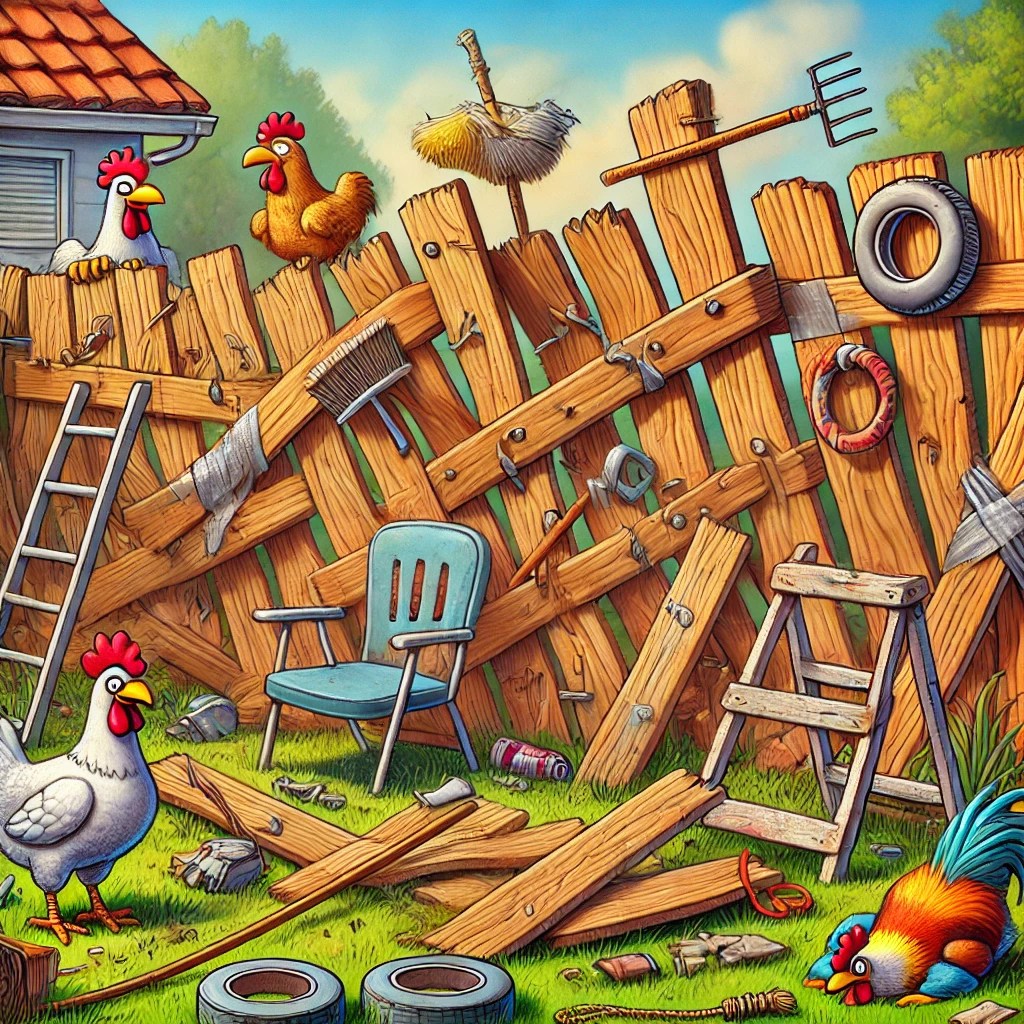
True confession:  We’ve definitely sprinted across the back lot in pajamas, armed with a broom, chasing after an escaped chicken (or two).  We’ve tripped over our homemade irrigation system, fished half-chewed plants out of Ryu’s mouth, and yes, we’ve had days where the stink bugs won.  I’ll say though, it’s in these random, unplanned moments that we remember why we do it; the laughter, the challenge, and the sweet satisfaction of a life lived more in tune with nature.

A Rewarding, Messy Adventure

Behind the scenes, backyard homesteading is about embracing imperfection.  It’s the early mornings and late evenings spent caring for animals who rely on you.  It’s the dirt under your nails, the half-eaten broccoli plants (dang pests!), and the beaming pride in your first successful harvest.  It’s messy, unpredictable, and sometimes a little smelly (don’t get me started on blood and bone meal!), it’s also rewarding beyond measure.

So, if you’re thinking of taking the leap into backyard homesteading, just remember; it’s equal parts hard work and hilarity.  There will be days you question your sanity, and days you wonder why everyone doesn’t do this.  And at the end of it all, you’ll have stories that no store-bought carton of eggs could ever tell or top!

Happy homesteading, y’all!  If you ever find yourself battling a feisty chicken or having a heart-to-heart with a carrot sprout, just know, you’re in good company.  Keep the faith, stay resilient, and enjoy the ride!  Let me know about your hilarious stories!

Upgrading Your Pot: The Growth We Resist and Need

Plants have this way of teaching us things without ever saying a word.  If you’ve ever cared for one long enough, you’ll notice that at some point, it starts to struggle, not because it’s unhealthy; because it’s outgrown its living situation.  The roots bunch up, the soil isn’t as nutrient rich, and waiting for more space.

And isn’t that exactly what happens to us in life?

We get comfortable in our environments, even when they stop being healthy for us.  We settle into routines, relationships, and mindsets knowing we’ve outgrown them.  And just like a plant that stays too long in the same pot, we start to get bound up, depleted, and ready for change.

Root Bound: When Growth Becomes a Struggle

A root bound plant will keep growing in all the wrong ways.  Instead of stretching out into fresh soil, the roots coil inward, trapping themselves in a cycle of stagnation.  It might still look okay on the outside for a while, but eventually, it stops thriving.

People do the same thing.  We stay in jobs that drain us (I’m SUPER guilty of this one), friendships that no longer align (same), or bad actors in our heads that limit change since it feels overwhelming.  The idea of repotting ourselves into something bigger, something unknown, is really scary.  On the other hand, if we don’t, we risk suffocating in a life that no longer fits.  Rotting from the inside out.

The Transplant Shock: The Hard Part of Change

Repotting a plant isn’t always a graceful process.  There’s some shaking involved, roots get disturbed, and for a while, it might look worse before it looks better (much like many things in life!)  It’s called transplant shock, and it happens when a plant is adjusting to its new home.

Humans go through this, too.  When we leave a toxic job, start a new relationship, move to a new place, or step into our own personal growth, it’s uncomfortable at first.  We might feel lost, uprooted, or unsure if we made the right decision.  Growth rarely feels good in the moment, that doesn’t mean it’s wrong.

New Soil, New Growth

After the shock, something incredible happens; the plant takes to its new space.  Its roots stretch out, absorbing fresh nutrients it never had access to before!  The leaves perk up, new growth appears, and suddenly, it’s thriving in a way it never could have in the old pot!

This is what happens when we allow ourselves to expand and get uncomfortable.  When we embrace change, push past the discomfort, and trust that we belong in a bigger space.  It’s in these moments, when we step into the unknown (one of Eva’s favorite dinner karaoke songs!), that we find out just how much we were capable of all along.

So, When Is It Time to Repot Your Life?

If you feel stuck, stagnant, or like you’re circling the same struggles over and over, it might be time to upgrade your pot.   Ask yourself:

Do I feel like I’ve outgrown my current situation (pot)?

Am I staying where I am out of comfort or fear (bound up)?

Is there something bigger calling me that I’ve been resisting (bigger pot)?


Growth isn’t about forcing yourself into something new before you’re ready, it’s about recognizing when you’ve already outgrown where you are.  When that moment comes, trust the process.  The discomfort won’t last forever, but the growth that follows?  That’s what life is all about!

So go ahead, upgrade your pot!  You were never meant to stay small!

Mental Health & the Chicken Coop: Understanding the Complexities Through Our Flock

Mental health is one of those things that’s both deeply personal and incredibly complex.  We all experience ups and downs, struggles and triumphs, and sometimes, we just don’t quite understand why we (or those around us) think, act, or feel the way we do.

Lately, I’ve found that one of the best ways to explain mental health, both to myself and others, is by looking at our chickens.  It might sound crazy, but hear me out.  If you spend enough time watching a group of hens, you’ll see personality traits emerge, power struggles play out (“Game of Thrones” levels!), and individual quirks that mimic what we see in human nature.

Morticia: The Narcissist

Every flock has a queen, and in our case, it’s Morticia.  She struts around with an air of self-importance, making sure everyone knows that she’s superior.  She takes the best sleeping spots, has to eat before anyone else, and has no issue pecking another hen to show them what’s up.

Much like narcissistic personalities in people, Morticia demands attention and control.  She’s charming in her own way and absolutely beautiful, and everything is on her terms.  I’m slightly jealous of her confidence, the downside is it also makes her blind to the needs of the flock.  If another chicken is struggling, Morticia isn’t exactly offering emotional support, she’s busy making sure you stay in your lane and that she looks the best.

Karen: The Anxious One

Karen is our worrier.  She’s the hen who jumps at shadows, squawks at us to cuddle her, and constantly checks over her shoulder as if the sky is about to fall (which, to be fair, is kind of her job according to the lore.)

She reminds me of how anxiety works in humans (me specifically.)  It’s that feeling of unease, the racing thoughts, the fear that something bad is just around the corner.  Karen never truly relaxes, even when all is well.  And just like people with anxiety, she often misreads situations, assuming danger when there is none.  On the upside, she also keeps the flock alert; sometimes, anxiety isn’t about irrational fear, just heightened awareness.

Hall & Oats: The Depressed Duo

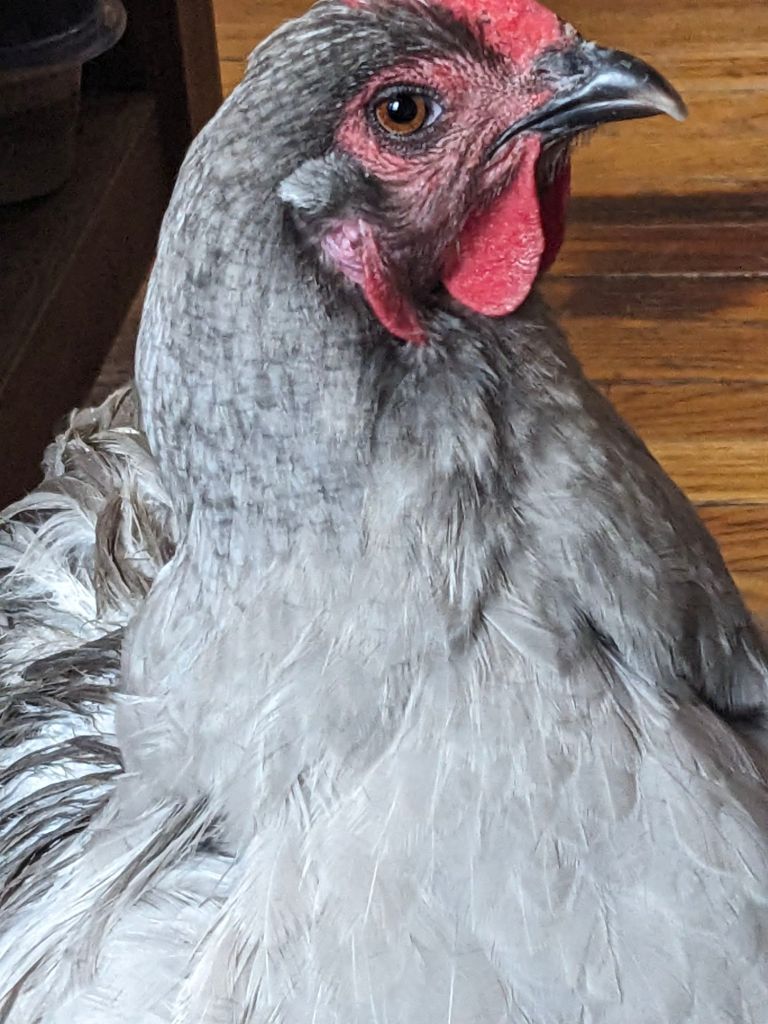
Our Brahma duo, Hall & Oats, are the quiet ones.  They move slowly, they don’t engage much in the pecking order drama, and they often sit by themselves, on top of the coop, staring into the distance like they’re contemplating the meaning of life (or they’re dumber than a box of rocks.)

Depression in humans is so common now due to a multitude of things; changing environments, scary situations, hopelessness.  I see this in Hall & Oats.  They aren’t sick, they aren’t bullied (even though they are lower on the pecking order), they also don’t engage the same way the others do.  Maybe they feel the weight of the world (or the coop) in a different way.  They’re not aggressive, they don’t steal food, they just exist.  Sometimes, that’s exactly what depression feels like, just existing, rather than growing and thriving.

Sweet Pea: The Schizophrenic Hen

Sweet Pea is…well, Sweet Pea.  She sees things the others don’t.  She reacts to invisible threats.  She’ll be pecking the ground one moment and suddenly sprint across the yard like she’s being chased by a ghost.  The other hens side-eye her A LOT, unsure if they should do the same or just pretend they don’t know who she is.

Schizophrenia in humans is a complex and often misunderstood condition.  It can involve delusions, and difficulty distinguishing what’s real from what’s not due to hallucinations, auditory and visual; Sweet Pea reminds me of how isolating that must feel, how terrifying it would be if your mind created a reality no one else could see.  While the other chickens sometimes avoid her, she’s still part of the flock, doing her best in a world that doesn’t always make sense.  Plus she happens to be our best layer!

The Pecking Order: The Social Structure of Mental Health

Every flock has a pecking order, an unspoken (and sometimes very physical) hierarchy that determines who eats first, who roosts where, and who gets to call the shots.  In many ways, human social structures work the same way.  Whether it’s in the workplace, social circles, or even within families, there’s always an invisible ranking system at play, whether we like it or not.

What’s interesting is how mental health can influence this dynamic.  The strong-willed and dominant (like Morticia) rise to the top, while the more anxious or withdrawn (like Hall & Oats) stay on the fringes.  Karen’s anxiety means she overreacts, while Sweet Pea’s erratic behavior leaves her misunderstood.

Despite their differences, they are still a flock.  They rely on each other, they stick together when it matters, and they each play a role in the balance of the group.

The Lesson from the Coop

Watching our chickens has given me a whole new appreciation for the complexities of mental health.  Just like in our flock, humans experience the world in different ways, some with confidence, some with fear, some with energy, and some with deep hurt.

Here’s the thing though, every single one of them belongs.  Morticia may rule the roost, Karen may panic at every gust of wind, Hall & Oats may seem lost in their own world, and Sweet Pea may dance to a tune only she can hear, and together, they make up the flock.  They rely on each other, balance each other out, and in their own way, make the coop whole (can you imagine a flock full of Karens!?)

Maybe that’s the real lesson; we don’t all have to think, feel, or react the same way to have value.  Every personality, every struggle, every strength has its place.  Whether in the chicken run or in life, the flock is stronger because of its differences, not despite them.

Finding Beauty in Every Atmosphere: Learning to See the Magic Around You

Our chickens!

Life has a way of making us believe that beauty is reserved for the obvious, the breathtaking mountain ranges, the beautiful ocean waves, the vibrant colors of a sunset.  The truth is, beauty exists everywhere.  It’s not just in the grand and the dramatic; it’s in the quiet, the ordinary, the overlooked.

Lately, I’ve been challenging myself to see the beauty in every atmosphere, no matter where I am.  Whether it’s the chaos of our chicken coop, a very active puppy making messes, or the hum of a busy street (our street has MANY interesting sounds), there’s something worth noticing if we just take the time to look.

The Beauty in the Chaos

Some days, my house looks like a tornado came through, Ryu making messes, Kodah barking (not helpful), dishes stacking up in the sink.  It would be easy to focus on the mess, the noise, the never ending to-do list.  I had to take a step back, I saw something different.  Now I see playfulness and fun in the way Ryu gets the zoomies, knowing it’s a sign of a happy pup.  I see warmth in the way my chickens appreciate being cuddled even though they’re chickens and they smell, completely trusting and happy.  I see love in the chaos.

We tend to think of beauty as peaceful, organized, and curated, in actuality, life doesn’t work that way.  Sometimes, beauty is an accidental dance party in the rain, even though you’re wearing nice clothes or a puppy with muddy paws, excited to see you, ignoring the fact that you’ll be covered in mud.  It’s the feeling of being surrounded by life, even when it’s messy.

Finding Stillness in Unexpected Places

On the flip side, I’ve learned to find beauty in the quiet moments too.  The first sip of coffee before my brain wakes up.  The way our fur babies nap in the afternoon.  The hush of snowfall at night (as long as I’m not in it!) There’s something deeply grounding about noticing these small moments, appreciating them for what they are instead of rushing through them.

It doesn’t matter where you are, city, country, suburbia, there’s always a moment of stillness waiting to be noticed.  Even in a noisy restaurant, there’s beauty in the way people connect, the way the servers glide across the floor with full trays, the way the lights and ceiling look, and if you’re overwhelmed, check out the bathroom!

Seeing Beyond the Obvious

Sometimes, beauty isn’t immediate.  Sometimes, you have to search for it.  A gray, rainy day might feel dreary at first, but if you really look, you’ll see the way the raindrops bead on a flower petal, the way the pavement reflects the sky, the way the air smells fresh and new.

The same goes for people.  Someone might seem ordinary at first glance, I can say that when you really listen, you’ll find their passion, their kindness, their spark.  Every person, every place, every moment holds something worth noticing if we take the time to see it.

Pause, Breathe, Take it In

Finding beauty in every atmosphere isn’t about pretending everything is perfect.  It’s about shifting the way we see the world, looking past the distractions, the expectations, the rush of everyday life.  It’s about noticing the way the light falls, the way laughter sounds, the way simple moments make life feel fulfilled.

So wherever you are today, whether it’s in the middle of a chaotic household, a bustling city, or a quiet countryside, pause for a moment. Breathe.  Look around.  Take it in.  I promise you, there’s beauty there, just waiting to be found.

Raising Kids vs. Raising Puppies: The Lessons in Love, Patience, and the Chaos that Ensues!

Our baby Ryu!

There’s a certain rhythm to raising both children and puppies.  It’s a mix of joy, exhaustion, repetition, and the overwhelming realization that your life will never be the same.  As someone who’s done both, I’ve come to appreciate the weird similarities between parenting human children and bringing up a puppers.

At first glance, you might think, no way, they’re totally different!  Hear me out, when you break it down, raising a child and raising a puppy follow eerily similar paths.

The Need for Routine (a.k.a. “Please Just Stick to the Schedule” “Why Are Your Shoes on the Wrong Feet?”)

Both kids and puppies thrive on consistency.  A toddler who knows bedtime comes after bath time will eventually stop fighting it (well, most nights, depending on the situation.)  A puppy who knows that outside trips happen right after meals will start to pick up potty training much faster.

Ryu, our Great Dane/Pyrenees/Pit mix, came into our home like a small, white hurricane.  At first, it was chaos; accidents on the floor, chewing on everything, and zoomies that defied the laws of physics (we literally rearranged to accommodate.)  I’ll tell you though, the moment that we locked into a routine?  Things started to shift.  He knew when it was time to eat, when to go outside, and when to settle down, for the most part.  The same goes for kiddos, when they understand what to expect, they find comfort in the routine.

Boundaries: Love with Limits

Whether it’s a child testing the limits of bedtime or a puppy pushing boundaries by chewing on the furniture or your favorite pair of slippers, both need to learn what’s okay and what isn’t.  It’s not about being harsh; it’s about setting expectations.

With Ryu, it was all about teaching “gentle” when playing with people.  Those big paws and sharp puppy teeth?  They don’t mix well with delicate skin.  So, just like you teach a child not to hit when they’re frustrated, we taught Ryu that playtime doesn’t involve nipping (his tiny front teeth are the most destructive!)

Patience: Because They Will Test Every Last Bit of It

Let’s be real, both kiddos and puppers will make you question your sanity (I still am…)   The toddler meltdown in the grocery store, Walmart specifically?  The shredded pillow you just bought?  It’s all part of the experience.

Here’s the thing, they’re both learning.  A child is figuring out emotions, how to communicate, and what behavior gets a reaction.  A puppy is figuring out the same thing, just in their own puppy world.  Losing patience only makes things harder.  Deep breaths, redirection, and consistency are key, whether you’re dealing with a child’s tantrum or a puppy who won’t put their harness on.

The Unmatched Loyalty and Love

Here’s where kids and puppies really align, there’s no love quite like it.  The way a child reaches for your hand when they’re uncertain, the way a puppy rests their head on your lap after a long day, it’s pure, unconditional, and absolutely worth the chaos.

Ryu, despite his trouble-making tendencies, has already cemented himself as part of our family.  He watches YouTube with us, follows us from room to room, and reminds us daily that love isn’t about perfection, it’s about showing up, every single day, no matter what.

The Rewards are Worth It

Raising kids and raising a puppy are two of the most rewarding, exhausting, patience-testing things you can do.  They will break things.  They will push buttons.  And they will also bring more love and laughter into your life than you ever imagined.

At the end of the day, whether it’s a child curling up next to you for a bedtime story or a big puppy flopping onto your feet for a nap, you realize, it’s all worth it.

Stretching Your Grocery Budget: Small Gardens, Smart Shopping, and Scratch Cooking

Not everyone has the space (or time) for an indoor greenhouse, but that doesn’t mean you can’t cut down on grocery costs in other ways.  Food prices keep climbing, and for many families, it feels impossible to keep a stocked kitchen without breaking the bank.  While I’d love to grow everything I eat (including the chickens that we have that I can’t seem to bring myself to eat) the reality is that sometimes a mix of smart shopping, meal prep, and even a few small container plants can make a big difference.

Shop Smart, Save Big

One of the easiest ways to save on groceries is knowing where to shop.  Stores like Aldi and discount grocery stores can dramatically cut costs compared to big-name supermarkets.  We’ve found that getting in with places like Sysco and buying staples like flour, rice, beans, and canned goods from these places keeps the pantry stocked for much less.

A few more money-saving shopping tips:

Stick to a list (and don’t shop hungry!)  Impulse buys add up fast (I need Reese’s peanut butter cups for some reason.)  Plan meals ahead and only buy what you need.

Buy in bulk when possible.  Some items (like dried beans, pasta, and frozen vegetables) can last for months. Check out deals on deep freezes at places like Home Depot or Lowe’s.  A deep freeze can save a ton of money and keep you stocked for longer.

Shop sales and markdowns.  Many stores mark down produce, dairy, and meat nearing their sell-by dates, great for meal prep!  Check out your local farms and ranchers for local meat and produce. Be cautious though, some sellers that sell at farmers markets increase their prices so check before buying.  Remember, you’re paying for quality over quantity.


The Power of Cooking from Scratch

Pre-made foods and convenience meals are pricey.  Cooking from scratch not only saves money but is usually healthier.  Even simple things, making your own bread, broth, or pasta sauce, can stretch your dollars.

Meal prepping helps, too.  Prepping a week’s worth of meals keeps you from grabbing expensive fast food when life gets busy.  A Sunday afternoon spent chopping veggies, cooking proteins, and portioning out meals can save both time and money.  Our daughter and I love to meal prep and sing karaoke!  (Another blog for another time! ☺️)

Small Space, Big Impact: Grow What You Can

Even if you don’t have a huge yard or room for an indoor greenhouse, you can still grow fresh food.  A small garden, a few potted herbs, or a window box of lettuce can make a surprising difference.  Some of the easiest and most space-friendly plants to grow include:

Herbs (basil, thyme, parsley, chives – perfect for windowsills)

Leafy greens (lettuce, spinach, Swiss chard – grows well in containers)

Cherry tomatoes (great in pots, perfect for snacking and salads)

Green onions (regrow them in water from store-bought ones) One of my favorites!


Even just a few homegrown ingredients can cut down grocery costs and add fresh, nutritious flavors to your meals.

Small Steps Add Up

You don’t need a farm or a giant freezer to start saving money on food.  A mix of budget-friendly grocery shopping, cooking from scratch, meal prepping, and a little homegrown produce can go a long way.  Every little bit helps, and with some planning, you’ll see your grocery bills shrink while still enjoying good, healthy meals.

What are your favorite ways to save on food?  Let’s swap ideas!  I’m planning on creating a recipe page and would love to feature any recipes that have helped your family!

How Sowing Seeds Helps Me Sow Peace in My Mind

There’s something about dirt under my fingernails (even when I have them done up all pretty) and the sight of tiny green sprouts pushing through the soil that quiets my mind.  Gardening has always been a peaceful place for me, and lately, starting seeds and watching them grow into seedlings has become more than just a hobby, it’s a lifeline.

Depression is a sneaky thing.  It creeps in, dulls the colors of life, and makes even the simplest tasks feel overwhelming.  When I’m working with seeds, something shifts.  The process of planting, watering, and tending to each little sprout gives me purpose, structure, and a reason to keep moving forward, even on the toughest days.

The Power of New Beginnings

Every seed I plant represents potential.  A tiny, unassuming particle holds the ability to grow into something beautiful and strong.  When I feel stuck in my emotions, watching that transformation reminds me that growth and change are ALWAYS happening, even when it’s slow, and even when I can’t see it yet.

In those early days of germination, I see my own journey reflected in the seedlings.  Just like them, I need the right conditions to thrive, care, patience, and a bit of understanding.  And I’ll tell you, just like seedlings, I remind myself that setbacks happen.  Some seeds take longer to sprout, some fail altogether (which I do still shed a tear for), but that doesn’t mean the process isn’t worth it.

A Daily Reminder to Nurture Myself

Tending to my seedlings forces me into a gentle daily routine.  I check the soil, adjust the light, and make sure they’re not too dry or too wet. This simple act of caretaking extends beyond the plants; I’m also learning to care for myself in the same way.

Instead of neglecting my own needs, I’m reminded that I, too, need consistency and love.  Just as my plants need sunlight, I need fresh air.  Just as they need water, I need hydration.  Just as they grow stronger with time, I remind myself that healing is a process, not an overnight transformation.

Hope in Every Leaf

Depression often makes the future feel uncertain, but gardening teaches me hope.  Even when I feel weighed down, my seedlings are a daily reminder that life keeps moving, growth keeps happening, and the effort I put in, no matter how small, matters.

Watching them thrive encourages me to keep going, even when I don’t feel like it.  They don’t grow in a day, but over time, with steady care, they transform into something beautiful.  I like to think that maybe, just maybe, so will I.

So, if you’re struggling, I encourage you to plant something.  Start with one small seed. Give it care, watch it grow, and let it remind you that life is still unfolding, one sprout, one leaf, one new day at a time.