Toxic Roots & Poisonous People: What Deadly Plants Can Teach Us About Red Flag People

Toxic plants and toxic people

Some plants are drop-dead gorgeous, and I do mean drop dead.  They bloom bright, thrive in the wild, and lure you in with sweet smells or innocent petals.  But touch the wrong one, and you’ll be in hives.  Swallow it?  See you on the other side.

People?  Well, they’re not all that different.

In both the garden and the human experience, beauty and danger often grow side by side.  So today, we’re comparing poisonous plants to toxic personality types, because sometimes the best life lessons come with leaves and thorns.

Let’s dig in.


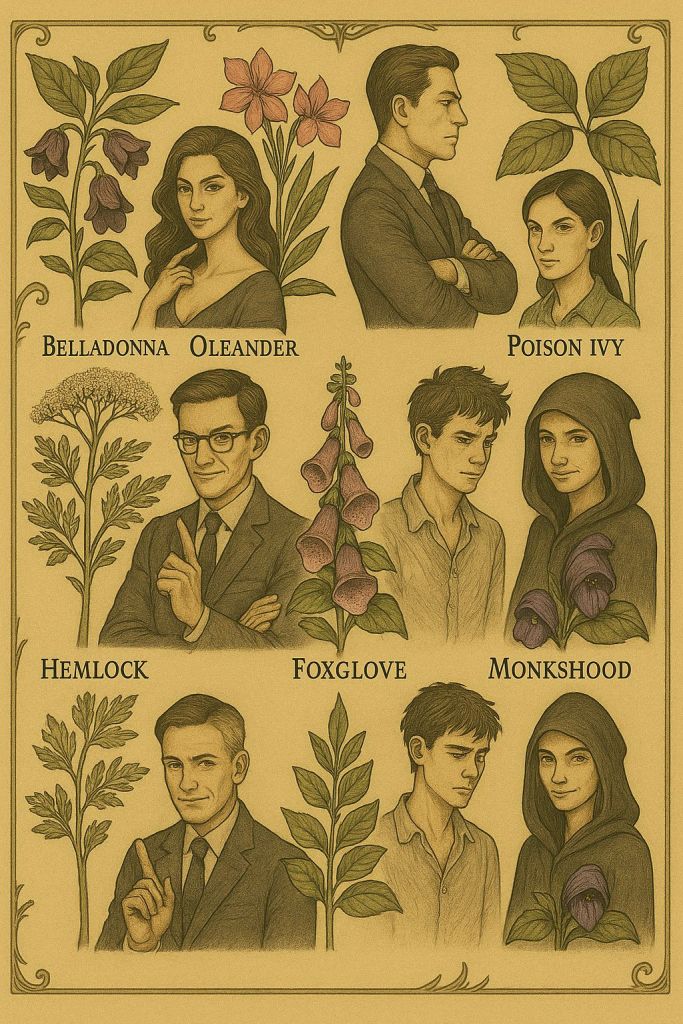
Belladonna – The Seductively Dangerous Type
Deadly Nightshade earned its name for a reason.  With shiny black berries and a history of being used as both a cosmetic and a poison, Belladonna is the queen of “look but don’t touch.”
Toxic trait: This is the smooth talker, the sultry charmer, the one who makes your stomach flutter and your intuition scream at the same time.  You’ll be mesmerized… right up until the symptoms kick in.


Oleander – The Pretty Narcissist
Oleander is everywhere, landscaped into neighborhoods because it’s easy to grow and stunning in bloom.  But even a nibble of this plant is deadly, and burning it can release fatal fumes.
Toxic trait: The narcissist who values looks over substance.  They’re all about their image, and being close to them means breathing in toxicity.  They’ll smile while they drain you dry.


Poison Ivy – The Passive-Aggressive
“Leaves of three, let it be”—and honestly, same goes for that friend who always delivers compliments with a sting.
Toxic trait: The passive-aggressive personality slides in under the radar.  One minute, they’re supportive; the next, you’re up all night wondering why their words made you feel like trash.  It’s not just a rash, it’s an emotional reaction.


Hemlock – The Intellectual Manipulator
Hemlock is responsible for one of history’s most famous poisonings (RIP Socrates).  It looks like parsley.  It pretends to be helpful.
Toxic trait: This is the one who weaponizes logic and “just playing devil’s advocate.”  They twist arguments, control the narrative, and make you doubt your own reasoning.  Smart?  Yes.  Safe?  No.


Foxglove – The Heartbreaker
Foxglove is mesmerizing.  Its bell-shaped flowers have medicinal qualities that regulate the heart, but too much, and your ticker just stops.
Toxic trait: This is the romantic rollercoaster.  One moment they’re flooding you with affection, and the next they’re gone, silent, or cruel.  It’s a cycle of highs and heartbreaks, and it’s exhausting.


Monkshood – The Secret Saboteur
Also known as Wolf’s Bane, this plant is highly toxic even through the skin.  It looks like something from a fairy tale, and acts like it too.
Toxic trait: The saboteur wears a smile, knows your secrets, and uses your trust as leverage.  You won’t see the betrayal coming until it’s already done.  They’ll poison your joy while telling you they love you.


Tend Your Garden Wisely
Your inner garden deserves sunlight, nourishment, and peace.  It’s not enough to weed out negativity, you’ve got to recognize what’s growing there in the first place.  Toxic personalities don’t always show up as obvious villains.  Sometimes they come wrapped in roses.

But you, wildflower, you’re here to bloom!  So protect your roots, know your boundaries, and remember:

Just because it’s pretty doesn’t mean it belongs in your life.

The Pagan Egg in the Easter Basket: Unearthing the Roots of Spring’s Sweetest Holiday

Let’s face it: Easter today is a wild mashup of hollow chocolate bunnies, pastel baskets, and enough fake grass to mulch a small garden.  What if I told you that if you dig beneath the neon sugar rush and church bells, you’ll find something much older, and a lot earthier, hiding in the soil.

Before Easter Sunday was penciled into the calendar, humans were already celebrating.  Not with Cadbury eggs, but with bonfires, blooming wildflowers, and stories about goddesses who coaxed life back from winter’s deep freeze.  So, where did Easter come from?  Let’s take a muddy, barefoot stroll through the history books and find out.


Ostara and the Dawn of Spring

Long before the Easter Bunny hopped into town, ancient Europeans gathered to celebrate the spring equinox.  The perfect moment of balance between night and day.  At the heart of these festivities was Ostara (or Eostre), the Germanic goddess of the dawn, fertility, and renewal.  Imagine a goddess with flowers in her hair, a basket of eggs at her feet, and wild hares darting in the dew.  Her party was all about new beginnings, the return of warmth, and the thrill of watching green shoot up through the thawing ground.


Eggs and Hares: Symbols Older Than Sunday School

You know those eggs you dye, hide, and sometimes forget about until they start to smell?  They’ve been spring’s go-to symbol of rebirth for thousands of years.  Eggs mean new life, pure potential, and (let’s be honest), a perfect excuse for a feast.

And the hare?  Forget your average backyard rabbit.  The hare was sacred to Ostara, a lunar creature of mystery and wild abundance.  Hares don’t lay eggs (sorry to ruin the Easter Bunny’s rep), but they do multiply faster than garden weeds, hence the ancient connection to fertility and life bursting at the seams.


How Christianity Sprouted from Pagan Soil

As Christianity spread through Europe, it did what every clever gardener does: it grafted new traditions onto sturdy old rootstock.  The resurrection story, timed perfectly with the spring equinox, blended seamlessly with existing celebrations of life’s return.  Churches layered new meanings onto eggs and hares, and before you could say “hallelujah,” pagan and Christian rites were swirling together in the same festive basket.


The Wild Reclaiming

So, what do we do with this knowledge?  We reclaim it.  We recognize that our love for dyed eggs, sunrise gatherings, and the electric hope of spring is as old as the hills.  This year, maybe plant something on Easter morning.  Light a candle for the dawn.  Let the kids run wild like spring hares.  Eat chocolate, but know you’re celebrating the ancient, wild, unbroken cycle of death and rebirth.

Happy Ostara, Happy Easter, Happy Everything Grows Again Day!

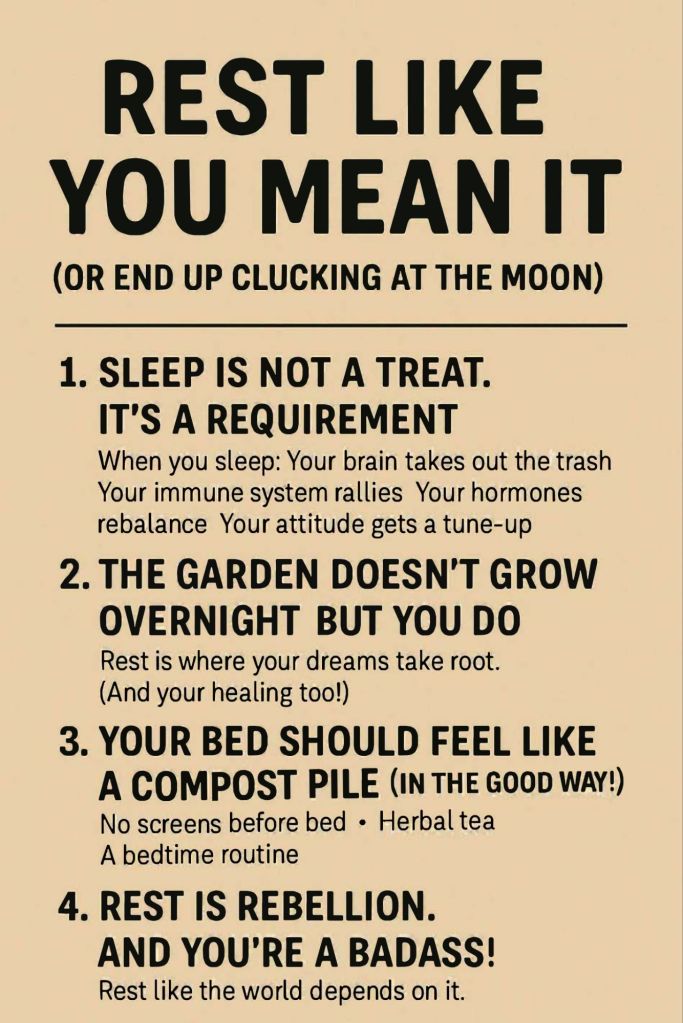
Rest Like the Soil: Why Deep Sleep is Part of the Yield

Picture this:
The garden’s tucked in for the night, stars overhead, the scent of lavender lingering in the breeze.  Everything’s still.  And while the world sleeps, the soil is working, resting, recharging, preparing for another day of growth.
Sound familiar?  It should.

Because like that soil, you weren’t built to run on fumes.  You were made for cycles.  For restoration.  For deep, soul-level rest.  So let’s talk about sleep; not as a luxury, instead, as a strategy for growth.


1. Nature Doesn’t Skip Rest, Why Should You?
The healthiest gardens take breaks.  Fallow fields, winter dormancy, afternoon shade, all signs that rest is sacred in nature.  Yet somehow we treat sleep like it’s negotiable.
Spoiler alert: it’s not.

Sleep isn’t just rest.  It’s the body’s reset button, where:

Hormones recalibrate

Muscles repair

The brain clears out yesterday’s clutter

And dreams do their quiet work behind the scenes


2. Burnout Doesn’t Belong in the Backyard
You wouldn’t run your garden on empty water tanks and half-lit sun lamps, would you?  So why run yourself without proper sleep?

Lack of sleep messes with:

Mood and memory

Immune system function

Blood sugar and metabolism

Motivation to even look at a tomato


This isn’t about perfection, it’s about honoring your yield.  And your yield needs rest!


3. Build a Sleep Sanctuary (Chicken-Free Zone)
Let’s face it.  You can’t rest well if your brain thinks it’s still on coop duty.  Your body needs clear signals that it’s time to wind down.

Try this:

Shut down screens an hour before bed

Diffuse calming herbs like lavender or chamomile

Keep your room cool, dark, and quiet

Listen to 528 Hz frequencies (plants love it, so will your nervous system!)


Think of it like putting the garden to bed, soft lights, quiet sounds, maybe a little moonlight magic.


4. You Grow in the Dark
And not just your plants.  You.

When you sleep:

Your cells rebuild

Your spirit restores

Your brain files away memories like a wise old librarian


This isn’t just about feeling rested.  It’s about becoming the kind of person who shows up for their life with clarity, calm, and capacity.


If you want a harvest that feeds your family and fills your soul, sleep is part of the planting plan.
So tonight, tuck yourself in like you do your seedlings.  Breathe deep.  Let go.  Rest like the soil.  Because tomorrow, we grow again!

How Music Can Make Your Garden Grow: The Science of 528 Hz

If you’ve ever heard that talking to your plants helps them grow, you’re not just being sweet, you might be onto something.  Scientists have been digging into the fascinating relationship between sound and plant growth, and what they’re finding might change how you garden forever.

So, Can Plants Hear?

Not in the way we do, but yes, plants respond to sound.  Studies show that plants can detect vibrations and use them to inform growth, movement, and even defense mechanisms.  It turns out, the tiny hair-like cells in roots and stems can “feel” sound waves moving through the air and soil.

Enter 528 Hz: The ‘Miracle Tone’

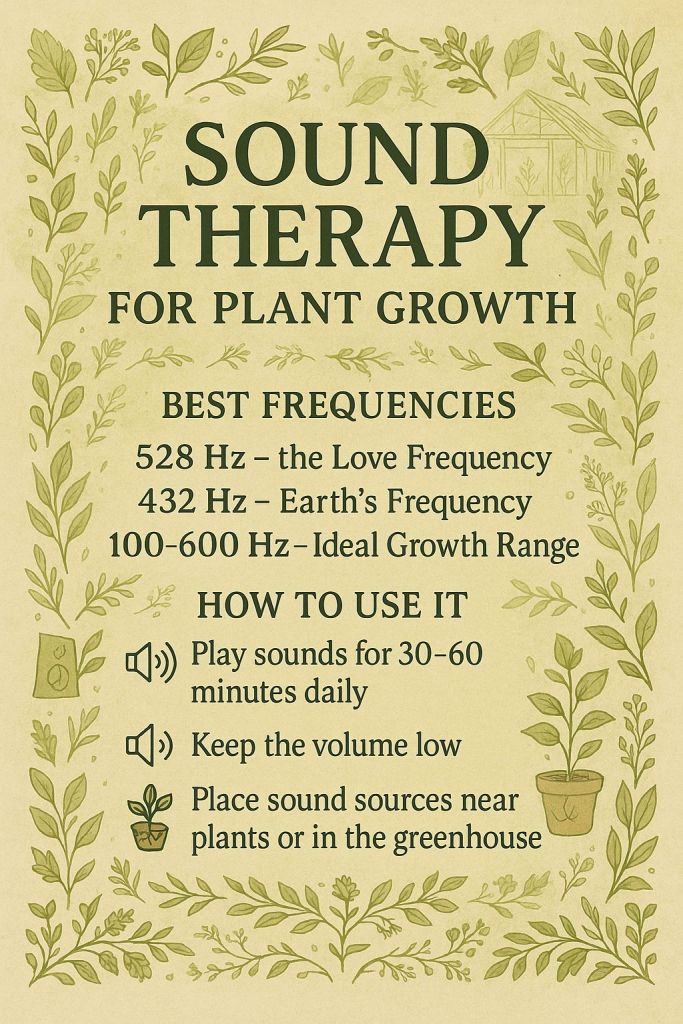
Known in alternative circles as the “Love Frequency,” 528 Hz is a mid-range sound frequency that’s been linked to everything from DNA repair to emotional healing.  For plants, this tone seems to support stronger stems, faster root growth, and more robust foliage.

Here’s Why It Works:

Stimulates cell structure – Low- to mid-frequency sound waves gently vibrate plant cells, helping them absorb water and nutrients more efficiently.

Boosts photosynthesis – Vibrations in the 400–600 Hz range have been shown to speed up the process by which plants convert sunlight to energy.

Improves germination – Studies found that seeds exposed to certain tones sprouted faster and with higher success rates.


It’s Not Just 528 Hz…

432 Hz: Often called the Earth’s frequency.  It’s soothing and gentle, thought to support overall plant health.

100–600 Hz range: Generally safe and beneficial for growth.

Too high?  That’s bad!  Frequencies over 5000 Hz may actually stress plants, causing slower growth or even damage.


How to Use Sound in Your Garden:

Play tones like 528 Hz for 30–60 minutes per day in your greenhouse or near your garden beds.

Use a waterproof Bluetooth speaker for outdoor setups.

Keep the volume moderate, think background hum, not rock concert.

Be consistent.  Sound therapy works over time.

We made a custom 528 Hz sound file just for our Yard 2 Yield community to keep your garden relaxed and thriving!

Toes in the Dirt, Spirit in the Soil: Naming the Sacred Spaces of a Modern Homestead

Homesteading!

There’s a certain magic that happens when you stop calling it “the front porch” and start calling it *The Sippin’ Sanctum.*  When your compost pile earns a title like *The Rot Lot*, and your pantry becomes *The Preserved Temple*, suddenly, your homestead is more than a home.  It’s a living, breathing world of its own.  And every corner deserves a name.

The Apothecary 🪄
**Sign Reads:** *Stirred by Instinct, Steeped in Soul*
This is where healing happens, in quiet moments, in wild herbs, in hands that remember what your great-grandmother knew by heart.  It’s not just a workspace.  It’s a spell in motion.

The Greenhouse 🪴
**Sign Reads:** *The Verdant Vault*
She’s hot, humid, and full of secrets.  From seedling prayers to jungle vibes, this is your plant nursery and your soul sauna.

The Chicken Coop 🐔
**Sign Reads:** *Cluckingham Palace*
Royal feathers only.  Egg-laying nobility resides here, complete with dust bath spas and gossip corners.  All subjects are welcome, but only if you bring meal worms.

The Compost Pile 💩
**Sign Reads:** *The Rot Lot (Where Trash Becomes Treasure)*
Dead leaves, coffee grounds, and yesterday’s scraps go in.  Rich, living earth comes out.  It’s not glamorous, it’s sacred.  This is where resurrection gets gritty.

The Herb Garden 🌿
**Sign Reads:** *Whispers & Wonders*
Every leaf here has a lesson.  Every blossom, a remedy.  This is your apothecary’s pantry and the Earth’s open-air pharmacy.

The Pantry 🫘
**Sign Reads:** *The Preserved Temple*
Lined with jars like stained glass in a cathedral of survival.  Stewed tomatoes, pickled onions, home-canned summer joy, every shelf is a sermon in self-reliance.

The Mudroom 🛠️
**Sign Reads:** *The Forge of Dirt Sorcery*
Wands made of steel (shovels).  Potions stored in cans (neem oil and blood meal.) This is where the magic begins, before it ever touches the soil.

The Front Porch 🏡
**Sign Reads:** *The Sippin’ Sanctum*
Morning coffee, evening tea, or a mid-afternoon iced lemonade.  This is your sanctuary for slow breathing, sun soaking, and watching the world go by.

Your homestead doesn’t need to be big to be a whole world.  Give your spaces names and they’ll give you back meaning.  Give them titles and they’ll wear them with pride.  Life’s too short to settle for “the garage.”

This is your queendom!  Name it like it matters! 👑 (We’ll talk about naming household items next week. 😉)

Moon-Phase Planting: Gardening by the Light of the Old Ways

Moon Phase Garden Guide

Let the moon be your garden coach, your cosmic calendar, and your gentle reminder to slow down and sync up.


Before There Were Clocks, There Was the Moon

Long before apps and seed packets told us when to plant, the moon lit the way.  Our ancestors didn’t guess when to sow, they watched the sky.  From ancient Egypt to your great-grandma’s almanac, moon-phase planting has deep roots in both science and soul.  It’s part wisdom, part rhythm, and a whole lot of magic.


How It Works: The Phases of Planting

Just like the tides, your garden is affected by the moon’s gravitational pull.  Moisture in the soil rises and falls, and so does the energy in your plants.  Here’s how to harness that natural rhythm:

1. New Moon (Dark Moon) 🌑

What to do: Rest, dream, plan, set intentions
This is your “deep breath” phase.  No planting, just vision.  Pull weeds, tidy beds, and think about what you want to grow, literally and figuratively.

2. Waxing Moon (New to Full) 🌔

Best for: Above-ground crops (lettuce, kale, tomatoes, herbs)
As the light grows, so does energy.  Seeds planted now tend to grow strong stems and leafy tops.  Think of it as your garden’s upward momentum.

3. Full Moon  🌕

Best for: Harvesting, transplanting, and soaking in the energy
The garden is buzzing!  Plants are at peak energy, and so are you.  This is a beautiful time to be hands-on and celebrate the bounty.

4. Waning Moon (Full to New) 🌘

Best for: Root crops (carrots, potatoes, garlic) and pruning
Energy is turning inward now, just like roots do.  This phase supports strong below-ground development and letting go (say hello to trimming back those tomato vines 🍅).


A Moon-Guided Month in the Garden

I whipped up a printable version of this so you can stick it on your fridge or in your garden journal. 😊 (Button at bottom of blog)


Tools to Get Started

Lunar gardening apps: Try “Moon & Garden” or “The Moon Calendar”

Old-school almanacs: Still surprisingly accurate and charming

Your own journal: Track what works for you, every homestead has its own rhythm


Planting With Intuition (and a Little Magic)

Following the moon doesn’t just improve your harvest, it reconnects you.  It brings flow to your routine.  It invites you to work with nature, not against it.  And hey, if planting peas under a waxing moon gets you outside and smiling, isn’t that enough magic?


Try This Month:

Pick one crop, just one, and try planting it according to the moon.  Journal the results.  See how it feels.  You might just find your garden growing… and your intuition, too.


“The moon doesn’t just pull tides, it pulls at the soul of your soil.”
Let’s grow with her.

The 10 Stages of Trying to Live ‘Naturally’ (According to My Family’s Reactions)

The process!

From homemade lotion to composting scraps, my family didn’t sign up for this… And here we are!

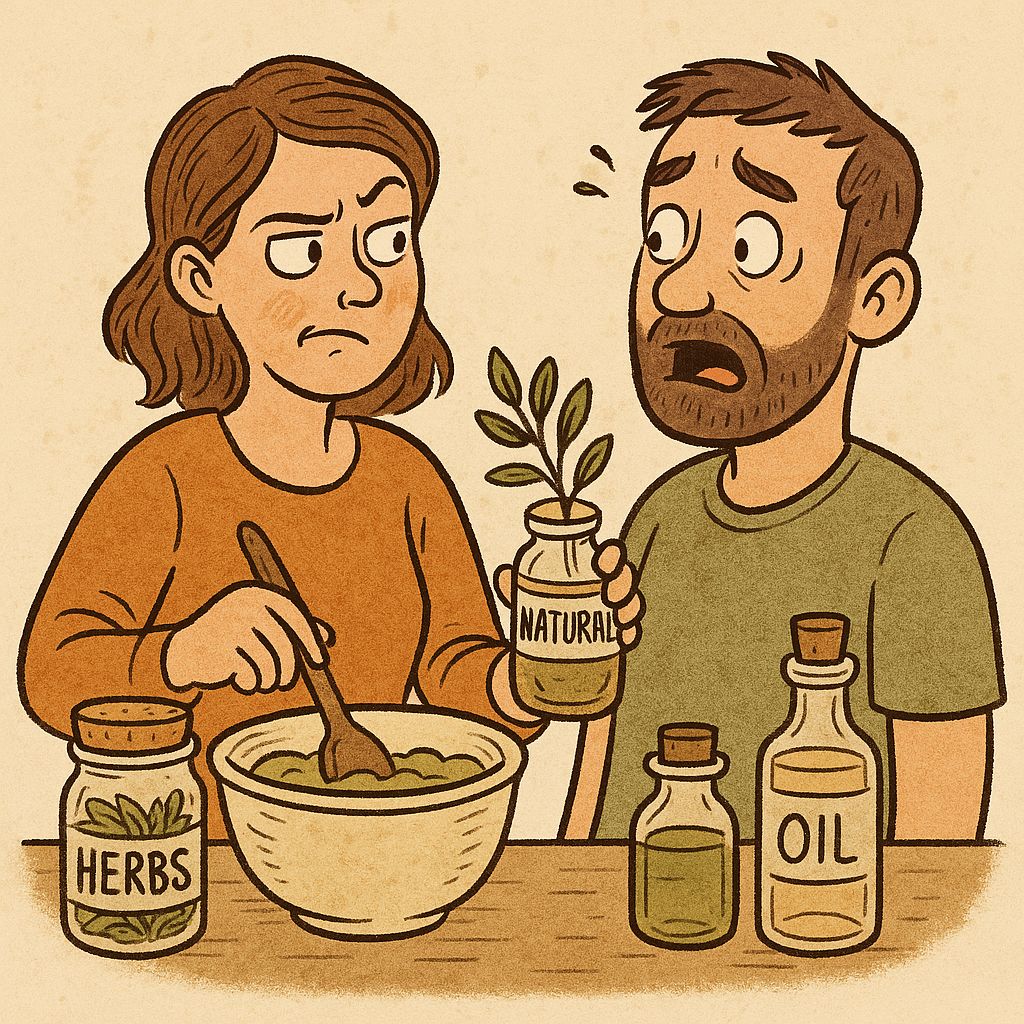
Let’s be honest: deciding to live “naturally” sounds simple and wholesome in theory.  You envision a peaceful, garden-rich lifestyle filled with herbal tea, birdsong, and handmade everything.  Let me just tell you, when you’re knee-deep in macadamia nut oil, explaining to your teenager why store-bought deodorant is banned in your house, things get… complicated.

Here’s how the journey played out in our house, according to the people I lovingly dragged along with me. 🥰


Stage 1: Denial
“You’re not seriously putting that on your face… are you?”
This was the era of confusion and mystical dreams.  I’d be in the kitchen whipping up lotion, listening to Viking chants, and my family would wander in looking concerned.  They didn’t believe I was replacing our household staples with things I grew in the yard or fermented on the counter.  They thought it was a phase…

Oh, sweet summer children.


Stage 2: Mockery
Cue the nicknames: “Witch,” “Hippie Queen,” “Dr. Bronner’s Long-Lost Niece.”
Every new recipe I made got a full roast session.  “So this lotion smells like old tea and regret?”
Correct.  Also… it works.


Stage 3: Resistance
They drew the line at shampoo.  My DIY apple cider vinegar/ fenugreek rinse caused a minor family mutiny.
Eva whispered, “I think it’s trying to kill us.”
Taylor stared down at the bottle like it owed him money.
Kodah ran every time I opened my essential oil box (he was also not safe during this time.)
And I held firm anyway.


Stage 4: Accidental Buy-In
One day I caught Eva using the lotion.  “It’s just for my face real quick,” she said.
Next thing I knew, it was in her car, her vanity, her backpack.
Interesting… 🤔


Stage 5: The Betrayal
I found a bottle of big-brand lotion in the bathroom.
Gasp! 😮‍💨
“IT WAS ON SALE!” they shouted, as if that made the betrayal less personal.
They’ve since repented (it’s probably because I’m also guilty of this one…)


Stage 6: Tolerance
They no longer flinch when I say things like “infused with calendula” or “crafted under the waxing moon.”
They now call my potions “magic,” and they no longer hide it under the sink!


Stage 7: Curiosity
“So what exactly does comfrey do again?”
Ahhh.  Music to my ears.
Now they ask real questions.  They even listen!
Sometimes they brag about how I “know all this herbal stuff.” 😏
Growth.


Stage 8: Pride (private and public)
They’re handing out my lotions to coworkers and friends like I run an underground apothecary!
“Yeah, my mom made that.  All-natural.  Works better than the store stuff.”
Oh NOW it’s cool.


Stage 9: Overconfidence
They start giving my remedies to other people.
“She has a tincture for that.  I’ll get you some.”
Excuse me, did you just promise my tincture cabinet?  Do you even know which one’s for allergies and which one’s for dysentery?  If we were on the Oregon Trail, you’d be dead…
Didn’t think so.


Stage 10: The Takeover
Suddenly, they’re asking if we can make a “summer collection” for Pampered Potions.
Requesting customized lotions like I’m a personal potion stylist. (Which I love, by the way 😉)
Who even are these people?


The Grand Reveal:
This whole thing, the herbs, the lotions, the soil under the fingernails and the  homemade ranch dressing in the fridge, wasn’t just about living naturally.  It was about reclaiming our health, our connection to the land, and our ability to choose what goes into and onto our bodies.

And maybe, just maybe, it was about leading my family, kicking and screaming (mind you, I’ve put them through veganism before) back to something real.
Now, they might still joke.  They might still sneak in a bottle of something mass-produced now and then.
They’ve also become my biggest testers, tasters, and truth-tellers.
(And yes, I am making a summer lotion collection.  Because they asked so nicely! 💗)

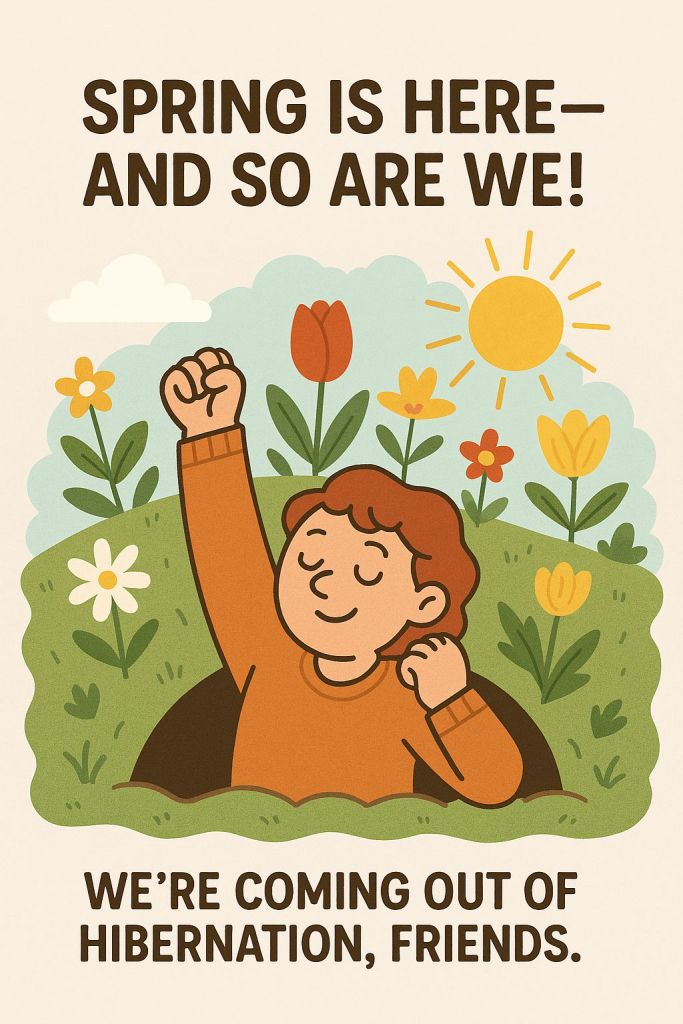
Spring Is Here, And So Are We!

After months of heavy blankets, cold bones, and snoozing our way through snow days, spring has finally cracked open the door like a beautiful farm fresh egg, and we’re walking through it barefoot and blooming.  (That actually sounds kinda gross… Nobody wants to walk through egg…)

There’s something magical about this moment.  The air shifts.  The light lingers longer.  Birds  annoy you in the morning a little earlier.  And suddenly, we remember we’re alive.  Like really alive!

Hibernation isn’t just for bears.

We’ve all been burrowed in, emotionally, physically, spiritually, hibernating in our own way.  Maybe we got quiet.  Maybe we lost our light.  Maybe we rested more than we planned (or worked too hard when we should’ve rested, which I’m totally guilty of!)  Now what?  Now the soil’s warming up.  And so are we. 🌞

Spring says: Come as you are.

Like Nirvana was telling us in the 90’s, you don’t need to emerge with a six-pack, a perfect plan, or an “organized” anything!  You just need to show up, muddy boots, messy buns, sleepy eyes and all.  Growth doesn’t need a grand entrance.  It just needs sunlight and a little curiosity.

So here’s your gentle nudge:

Go outside, even if it’s just for five minutes.

Start something small, like a seed, a journal, or a morning ritual.

Let yourself thaw.  Un-crunch.  Stretch out.  Yawn big and loud.

This season isn’t about becoming someone new, it’s about remembering who you are when the world is starting to wake up again.

We’re coming out of hibernation, friends.  And it’s going to be glorious! 🤩

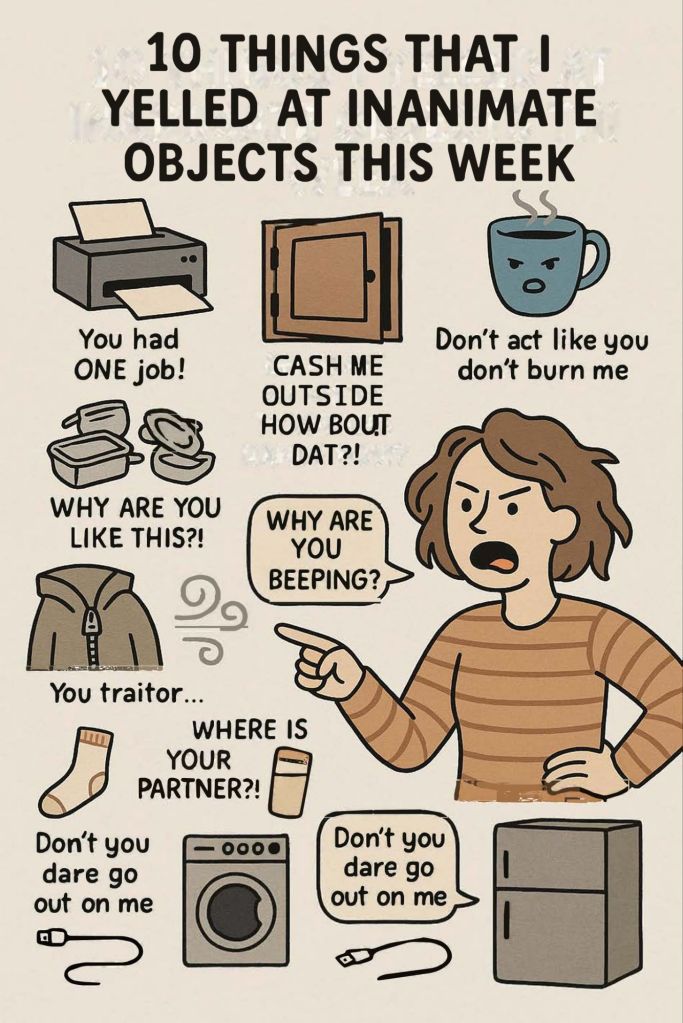
10 Things That I Yelled at Inanimate Objects This Week

All the things…

Apparently, I’m fluent in passive-aggressive domestic shouting!  The following are examples from the past week:

1. The Printer
“You had ONE job!”
All I wanted was a simple printout of our new reflection page!  Instead, I got a flashing red light, an error code about cartridges, and paper jammed in a way that defies physics.  I’m 87% sure it’s just gaslighting me at this point.


2. The Cabinet Door That Attacked My Head
“CASH ME OUTSIDE! HOW BOUT DAT!”
I leaned down, stood up too fast, and BAM, judo chop to the head from the corner of the cabinet.  I am now seeing stars and in negotiations with Ryu for emotional support.


3. My Coffee Maker
“Don’t act like you don’t burn me every time I try to clean you!”
I opened the top to my single serve coffee maker and it thrust a thousand suns onto my hand!  Apparently, the universe hates me and loves burning my hand.


4. Junk Drawer
“WHY ARE YOU LIKE THIS?!”
Every random and abandoned  thing you can think of.  It’s a tragic, stabby love story, and I’m the only one suffering.


5. The Wind
“COULD YOU NOT?!”
Just trying to carry a stack of grow bags like a functioning adult.  Instead, I’m chasing bags across the yard like I’m reenacting a low-budget Twister remake.


6. My Coat Zipper
“You traitor.”
Right when I’m trying to get Ryu outside and trying to look like a whole adult human, my coat decides it wants to audition for Cirque du Soleil by flipping inside out and eating itself…


7. The Dish Washer
“Why are you beeping??”
Door shut, full of water (it’s a countertop washer).  Everything is perfect and yet…  BEEP!  BEEP!  BEEP!  I fear for my sanity at this point.


8. That One Shoe
“WHERE IS YOUR PARTNER?!”
Ryu has an uncanny ability to make shoes disappear, but only one of the pair.  This is an everyday frustration.


9. The Fridge Light
“Don’t you dare go out on me.”
That little flicker when you open the door?  That’s fridge-speak for “you’re about to enter the dark ages.”  Last time it went out, it took YEARS for me to remedy.


10. My Ozlo Charger
“I TRUSTED YOU.”
It was plugged in.  It pretended to charge.  It lied.  My headphones are dead.  My great night sleep is dead.  Our relationship is dead.


Moral of the Story:
Inanimate objects have it out for us.  Or maybe I just need more sleep (thanks, Ozlo) and less caffeine (thanks, homicidal coffee maker.)  Either way, stay safe out there, friends, and don’t trust the junk drawer or the coffee maker!

Cultivating Growth and Prosperity with Yard 2 Yield!

A brighter future

As the world becomes rapidly urban, many of us find ourselves yearning for a connection to nature and a sustainable way to enrich our lives.  That’s where Yard 2 Yield steps in.  Our mission is to empower individuals to transform their backyards into thriving gardens, where they can cultivate their own food and, in turn, cultivate growth and prosperity in their lives!

There’s something profoundly rewarding about planting a seed and nurturing it into a flourishing plant.  Gardening not only teaches patience and resilience, it also provides a deep sense of accomplishment.  At Yard 2 Yield, we offer resources and guidance to help you start your own garden, no matter your skill level.

Growing your own food is not just a hobby; it’s an investment in your future.  By reducing your reliance on store-bought produce, you can save money and enjoy fresher, healthier food.  With our expertise, Yard 2 Yield ensures that your garden yields the best return on investment, both nutritionally and financially.

When you cultivate your own garden, you contribute to a larger movement of sustainability and self-reliance.  By reducing your carbon footprint through local food production, you take part in positive environmental change.  Moreover, as you thrive, so does your community.  Sharing surplus produce fosters community spirit and resilience.

By embracing the principles of Yard 2 Yield, you are not only enhancing your personal life but also paving the way for a greener, more sustainable future.  Each garden adds to the mosaic of urban agriculture that supports biodiversity and ecosystem health.

At Yard 2 Yield, we believe that every plot of land holds the potential for growth and prosperity.  Whether you have a window box or a spacious yard, our team is here to guide you in transforming your space into a source of nourishment and joy.

Have you started your journey with us yet?  Let’s sow the seeds of growth and prosperity together!